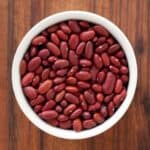
Instant Pot® Kidney Beans Recipe
A simple, budget friendly way to cook dry kidney beans in an Instant Pot®. Perfect for adding to soup, salads, or rice bowls. This recipe can be made with either soaked or unsoaked kidney beans. Soaking the beans overnight is recommended for easier digestion and reduces cooking time by about half—from 40 minutes (unsoaked) to 20 minutes (soaked).
Servings: 4 1/2 Cup Cooked Beans
Ingredients
- 1 Cup Dried Kidney Beans, Rinsed
- 3 Cup Water
Instructions
Without Soaking
- Rinse 1 cup of dry beans under cold water.
- Add beans to Instant Pot® with 3 cups of water.
- Seal the lid and cook on high pressure for 35 to 40 minutes. When the cooking time is complete, allow the Instant Pot® to sit for 15 minutes (natural pressure release). Then, turn the valve to "venting" to release the remaining pressure (quick release).
- Drain the excess water if needed.
With Soaking (Recommended For Easier Digestion and Faster Cooking)
- Soak 1 cup of dried kidney beans in water for at least 8 hours (or overnight).
- Drain and rinse the soaked beans under cold water.
- Add beans to Instant Pot® with 3 cups of water.
- Seal the lid and cook on a high pressure for 18 to 20 minutes. When the cooking time is complete, allow the Instant Pot® to sit for 15 minutes (natural pressure release). Then, turn the valve to "venting" to release the remaining pressure (quick release).
Notes
Approximate Nutrition Information (per 1/2 cup cooked kidney beans): 142 calories, 25 g carbohydrates, 10 g protein, 0 g fat, 7 g fiber, 0 mg cholesterol, 0 g added sugar, 1 mg sodium, 39 mg calcium, 453 mg potassium, 154 mg phosphorus, 20 mg oxalate
Natural Pressure Release: Allow the Instant Pot to sit undisturbed after cooking so the pressure drops on its own—this can take about 15 minutes. This process is complete when the floating valve drops.
Quick Release: After the natural release time, turn the valve from "Sealing" to "Venting" to release any remaining pressure —be cautious of steam that rises are this process.