
This article was written by dietetic student Lavanya Chhetri & reviewed by Melanie Betz MS, RD, CSR, FNKF, FAND.
If you are aiming to eat heart healthy or support kidney health, good news! Instant pot® kidney beans are one of the most affordable and nutrient packed food you can eat.
Instant pot® makes it easy and cheap to make beans. Because really, who has time to boil them for hours?!
Kidney beans are a cheap option found in a variety of places such as grocery stores, corner stores, dollar stores, and food pantries. Whether you’re managing high blood pressure, diabetes, kidney disease or just trying to feed your family a healthy meal, this post will walk you through why kidney beans deserve a spot on your plate (and in your Instant Pot®).
Table of Contents
Health Benefits of Kidney Beans
Kidney beans are a healthy choice because they are packed with a ton of health promoting nutrients. Like other beans, kidney beans can be counted as either a protein or a vegetable.
Eating just a ½ cup of beans per day can provide multiple benefits including:
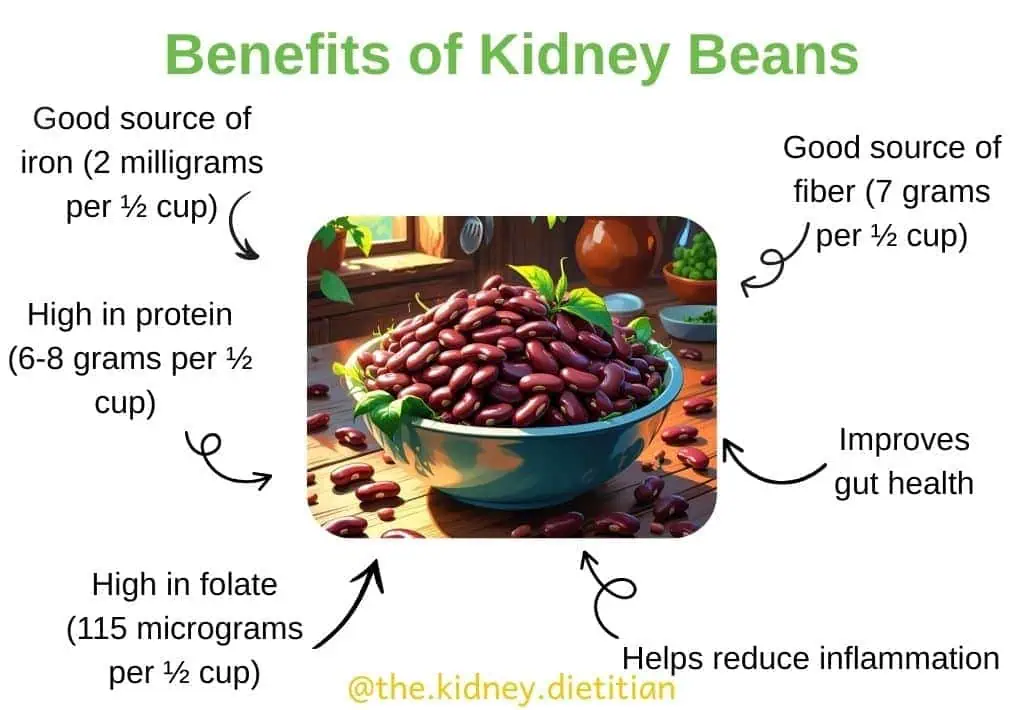
- Fiber: Helps you feel full longer, lowers LDL (bad) cholesterol, reduces blood sugar, and support bowel health by promoting regularity.
- Plant-Based Protein: A ½ cup of kidney beans provide only 6-8 grams of protein – a great non-animal protein option.
- Iron: Good source of non-heme iron, supplying almost ⅓ of your recommended iron intake – important for energy and oxygen transport.
- Potassium & Magnesium: Minerals that support heart function, help control blood pressure, and may help prevent calcium oxalate kidney stones.
More About Fiber & Kidney Beans
A 1/2 cup serving of cooked kidney beans contains about 6-7 grams of fiber, which provides nearly 25% of the daily recommended intake for women and approximately 18% for men.
In addition to fiber, kidney beans also provide resistant starch; both fiber and resistant starch may help regulate blood sugar and serve as gut-friendly prebiotics.
These prebiotics travel through the digestive tract until they reach the colon, where they are fermented by beneficial bacteria. The fermentation of these healthy fibers produces short-chain fatty acids (SCFAs) – such as butyrate, acetate, and propionate – which may promote colon health and reduce the risk of colon cancer.
Friendly warning: some insoluble fibers in kidney beans, particularly alpha-galactosides, may cause diarrhea and flatulence in some people.
Kidney Health Considerations: Phosphorus and Potassium
The body does not absorb as much phosphorus and potassium from kidney beans (and other plant-based foods) as it does from animal foods or food additives.
The body absorbs only 30–50% of the phosphorus in plant-based foods like kidney beans, because it’s often bound to phytic acid (phytate). Humans don’t have the enzymes (phytases) to fully break down phytate and release all the phosphorus.
Similarly, our bodies generally absorb less than 50% of the potassium from whole, plant based foods like kidney beans.
Despite the lower absorption, kidney beans still offer valuable nutrients, including plant-based protein, fiber, and various vitamins and minerals.
For people with kidney disease, eating more plant based protein from foods like kidney beans can help control acidosis and help slow or stop the progression of kidney disease.
Kidney Beans and Kidney Stones
Beans can be can be a great part of any kidney stone friendly diet. Because beans are packed with multiple key nutrients, they make a great choice for people with kidney stones.
Magnesium
Beans are a good source of magnesium, a mineral that may help prevent kidney stones. Magnesium works by binding to oxalate in the digestive
system. Therefore, less oxalate ends up in your urine, decreased the likelihood of kidney stone formation. Some doctors may prescribe magnesium supplements, like magnesium citrate, to help lower the risk of stone as well.
Phytic Acid
Beans also contain something called phytic acid (aka “phytate). It may sound scary, but plants naturally produce this compound. It help slow down the growth of calcium kidney stone crystals.
Lower Dietary Acid Load
Compared to meat, beans produce much less acid in the body. Too much acid from animal protein can increase the amount of calcium in your urine, lower your urine pH and increase the risk of both uric acid and calcium oxalate kidney stones.
What About Oxalate!?
You may have heard of something called oxalate in regards to kidney health. While some people worry it can contribute to kidney stones, there’s no need for alarm—oxalate isn’t as scary as it sounds
Many healthy foods like beans, nuts and vegetables contain oxalate. Most people can eat food without any problems. In fact, cutting out food with oxalate can take away important nutrients your body needs like fiber, vitamins and minerals.
The best way to protect your kidneys are to drink plenty of water, eat enough calcium from foods (like yogurt, milk, or cheese), and enjoy a healthy, balanced diet.
So go ahead and eat those tasty Instant Pot® kidney beans – They are good for your kidneys, heart, and plate!
Instant Pot® Kidney Bean Benefits
Instant Pot® is one of the quickest way to cook dried kidney beans. This plain and simple recipe will quickly yield delicious red kidney beans that you can use in any way you choose!
Instant pot® is a fabulous to make kidney beans for many reasons:
- It’s Fast: You can save 1-2 hours when cooking unsoaked kidney beans in an Instant Pot®, rather than on the stove.
- It’s Convenient: With Instant Pot® there is no need for constant monitoring during cooking. Just press a few buttons and walk away!
- Consistency: Using an Instant Pot® can result in even cooking and better texture for dried beans.
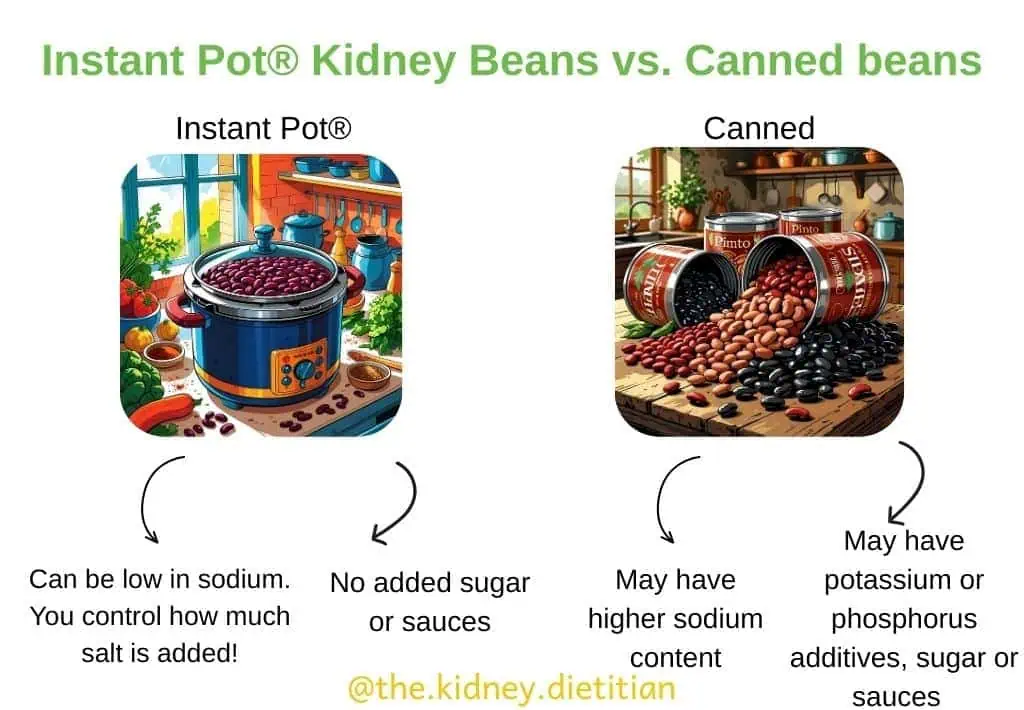
- Low In Sodium: Making kidney beans from scratch in the instant pot ® allows you to control salt content, unlike many canned beans which are higher in sodium.
Sodium In Canned Beans
A regular can of kidney beans may contain up to 400 mg of sodium per 1/2 cup. By using a low sodium and no salt added option, you can bring that number down as little as 10-30 mg per serving. Draining the beans can also reduce the sodium by nearly 40%. A simple trick with a big impact!
Where To Find Low Sodium Kidney Beans?
When looking for a low sodium kidney bean option, check the label for terms like “no salt added” or “low sodium.”
Popular brands such as Eden, Whole Foods 365, and Simple Truth offer canned kidney beans with reduced sodium, making them a heart-healthy choice. For an even lower sodium alternative, try frozen cooked kidney beans, which are often free of added salt.
And don’t forget, cooking dry kidney beans in an Instant Pot® is great way to control ingredients and avoid added sodium entirely.
Instant Pot® Kidney Beans Recipe
Ingredients
- 1 Cup Dried Kidney Beans, Rinsed
- 3 Cup Water
Instructions
Without Soaking
- Rinse 1 cup of dry beans under cold water.
- Add beans to Instant Pot® with 3 cups of water.
- Seal the lid and cook on high pressure for 35 to 40 minutes. When the cooking time is complete, allow the Instant Pot® to sit for 15 minutes (natural pressure release). Then, turn the valve to "venting" to release the remaining pressure (quick release).
- Drain the excess water if needed.
With Soaking (Recommended For Easier Digestion and Faster Cooking)
- Soak 1 cup of dried kidney beans in water for at least 8 hours (or overnight).
- Drain and rinse the soaked beans under cold water.
- Add beans to Instant Pot® with 3 cups of water.
- Seal the lid and cook on a high pressure for 18 to 20 minutes. When the cooking time is complete, allow the Instant Pot® to sit for 15 minutes (natural pressure release). Then, turn the valve to "venting" to release the remaining pressure (quick release).
Notes
If you enjoy this recipe, you may also like our other low sodium bean recipes like refried beans, baked beans, and vegetarian red beans and rice.
Happy Eating!
Melanie
