Ozempic® (semaglutide) has become a hot topic in the health world. Originally designed to help people with type 2 diabetes manage blood sugar, it’s now widely used for weight loss too. If you’ve had kidney stones before, you may be wondering: can Ozempic® cause kidney stones? Let’s break down what the science says – without the scary headlines or diet confusion.
Table of Contents
What Is Ozempic® (Semaglutide)?
Ozempic® is a medication in a class called GLP-1 (glucagon like peptide) receptor agonists. Wegovy® is another brand name for the medication semaglutide.
GLP-1 receptor agonists work by helping your pancreas release insulin, slowing how quickly food leaves your stomach, and reducing appetite. That’s why many people lose weight on it. But like any medication, Ozempic® comes with side effects – and if you’ve had kidney stones, you’re probably on high alert for anything that could make them worse.
Zepbound® & Mounjaro® (Tirzepatide)
Tirzepatide (brand names Zepbound® & Mounjaro®) has also gotten a lot of press lately for the ability to help with weight loss. These medications contain both a GLP-1 receptor agonist and GIP-1 (gastric inhibitory peptide) agonist. The GIP-1 agonist part of tirzepatide works in a similar way as GLP-1 agonists.
In general, tirzepatide results in greater weight loss compared to semaglutide. (1)
Ozempic® (semaglutide) and Kidney Stones: The Research
The concern with Ozempic® and kidney stones seems to come from one study that found people with diabetes who were treated with GLP-1 receptor agonists (like Ozempic®) had more kidney stones compared to people treated with sulfonylureas. (2)
Although this is concerning, other studies have not found a link between Ozempic® and kidney stones. A 2025 retrospective review found no differences in urine chemistry for people taking GLP-1 agonists. (3)
In fact, some have found positive changes in urine chemistry with Ozempic® and similar drugs. A poster presented at the American Urological Association in 2023 found that people with diabetes who took a GLP-1 agonist had higher urine citrate levels compared to people without diabetes. (4) Another review found that people with kidney stones taking a GLP-1 agonist for weight had lower urine oxalate (18mg/day vs. 21mg/day) after 1 year. (5)
Other studies have found mixed results. A 2024 review found that people with kidney stones who took GLP-1 agonists had higher citrate, but also lower urine pH, higher sodium, uric acid and oxalate compared to people who did not take these medications. (6)
Bottom line? When you look at the research as a whole, there is no strong data to link Ozempic® with kidney stones.
How Ozempic® Might Cause Kidney Stones
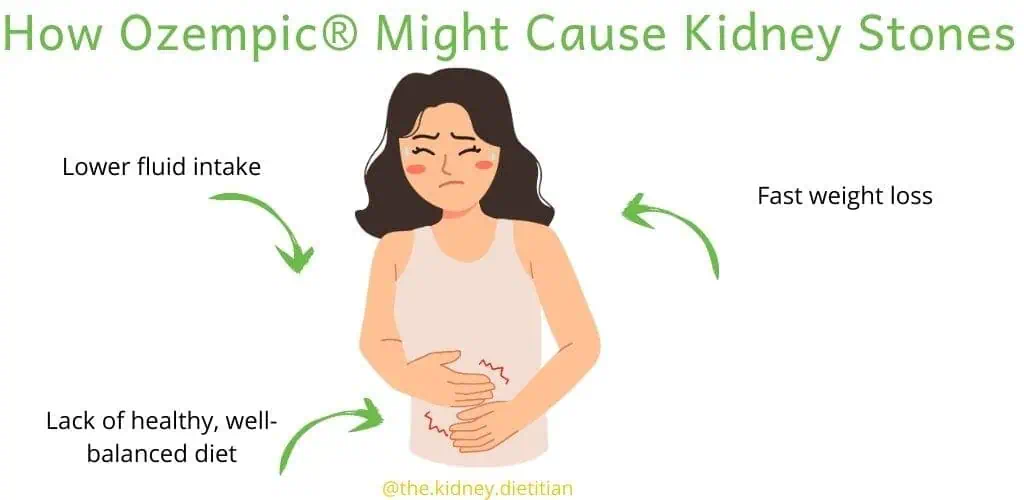
Ozempic® does not directly impact how your kidneys work, but it is possible the side effects could.
Nausea, vomiting and generally feeling “icky” are common side effects of taking Ozempic®. There is also concern that Ozempic® could lower your desire to drink water, not just eat food.
How to Prevent Kidney Stones If You Take Ozempic®
If you take Ozempic®, or any other semaglutide or tirzepatide medication, here are some practical tips to help keep your risk of kidney stones down.
- Drink plenty of fluids. Ozempic® might make it even harder to meet your fluid goals. People with kidney stones should drink about 100 fluid ounces of fluid each day. Spread it out and sip often, especially if you feel nauseated.
- Eat a healthy, balanced diet. With reduced appetite, food can become less of a priority. But, it is still very important to eat a healthy well-balanced diet when taking Ozempic® to both reduce the risk of kidney stones and, prevent nutritional deficiences. Good nutrition can help control uncomfortable side effects like constipation. It is highly recommended to work with a registered dietitian to support your weight loss journey with Ozempic®.
- Get a 24-hour urine test. If you’ve had kidney stones, a 24-hour urine test is recommended at least once a year.(7) This test can track your risk of forming more kidney stones after starting Ozempic®, and direct prevention strategies to reduce that risk,
- Talk with your doctor and dietitian. Make sure your medical care team knows about your concern of kidney stones so they can watch your labs and give you personalized advice.
The Bottom Line
So, can Ozempic® cause kidney stones? Probably not directly – but it might increase your risk if you get dehydrated or do not eat a healthy, balanced diet. If you’re taking Ozempic and have had stones before, don’t panic. Just be extra mindful about hydration and nutrition.
And remember: preventing kidney stones isn’t about cutting everything fun out of your diet. It’s about finding a plan that works for your body. That’s what I’m all about here at The Kidney Dietitian – helping you enjoy food while helping you live kidney stone free!
Listen to the Eat Away Kidney Stones Podcast episode – Can Ozemic Cause Kidney Stones?
👉 Want to learn more about personalized kidney stone prevention? Check out my free class: The 3-Step Method to Prevent Kidney Stones
Happy Eating!
Melanie