
This article was written by dietetic student Emma Kortmansky & reviewed by Melanie Betz MS, RD, CSR, FNKF, FAND.
Is beer really good for kidney stones, or is it just some crazy myth? Is there any validity to this claim?
Short answer: not really. Keep reading and let’s explore the possible role of beer and kidney stones.
Table of Contents
Beer Nutrition Facts
Beer is a popular beverage enjoyed by many. Here’s what you might find in a typical 12 ounce (355 mL) serving of beer:
- About 153 calories
- Around 13 grams of carbohydrates
- About 2 grams of protein
- Less than 1 gram of fat
- Varying alcohol content but typically 4-5% alcohol by volume (ABV)
Keep in mind, nutrition is very different depending on the type and brand of beer.
Can Beer Prevent Kidney Stones?
Origins Of The Myth
The idea that beer can help with kidney stones likely comes from its diuretic effect – meaning that it makes you urinate more. Some people thought that increased urine flow could help “flush out” kidney stones.
Is There Any Evidence To Support This?
Research on this topic is limited and inconclusive. There have been a few studies looking at beer and kidney stones. Some older research found that people who drank small amounts of beer had a slightly lower risk of developing stones. Scientists think this might be because beer makes you urinate more, which could help make your urine less concentrated and make kidney stones less likely.
But here’s the catch – the research isn’t strong enough to say beer, specifically, is any better than plain old water. Most of these studies only looked at people’s drinking habits and whether they had kidney stones, which means other factors (like diet or water intake) could explain the results. No high-quality study has shown that drinking beer is a safe or reliable way to prevent or help pass kidney stones. And, drinking beer has obvious concerns (more on that later).
So Why Do We Believe It?
Beliefs about beer and kidney stones may persist because of anecdotal stories and the hope that beer can help kidney stones. However, these beliefs are not supported by solid scientific evidence.
Why Beer Shouldn’t Be “Prescribed” For Kidney Stones?
The Obvious Answer – It’s Alcohol!
Beer has alcohol in it, and alcohol can harmful if you drink too much. Alcohol can negatively affect your body in various ways:
- Altered state: Impaired judgement, accidents, blackouts, overdose
- Organ damage: Liver, pancreas, heart, immune, digestive, neurological
- Cancer risk: Elevated across multiple types – even at low intake
- Cognitive and mood: Memory loss, dementia, depression, anxiety
- Addiction and social: Dependence, alcohol use disorder (AUD), social, legal, and relationship consequences
Alcohol affects virtually every major system in the body – from brain function and hormonal balance to cancer risk and societal well-being. Eve moderate consumption is not without harm, and vulnerable groups (e.g., women, older adults, those with chronic health issues) may face bigger consequences.
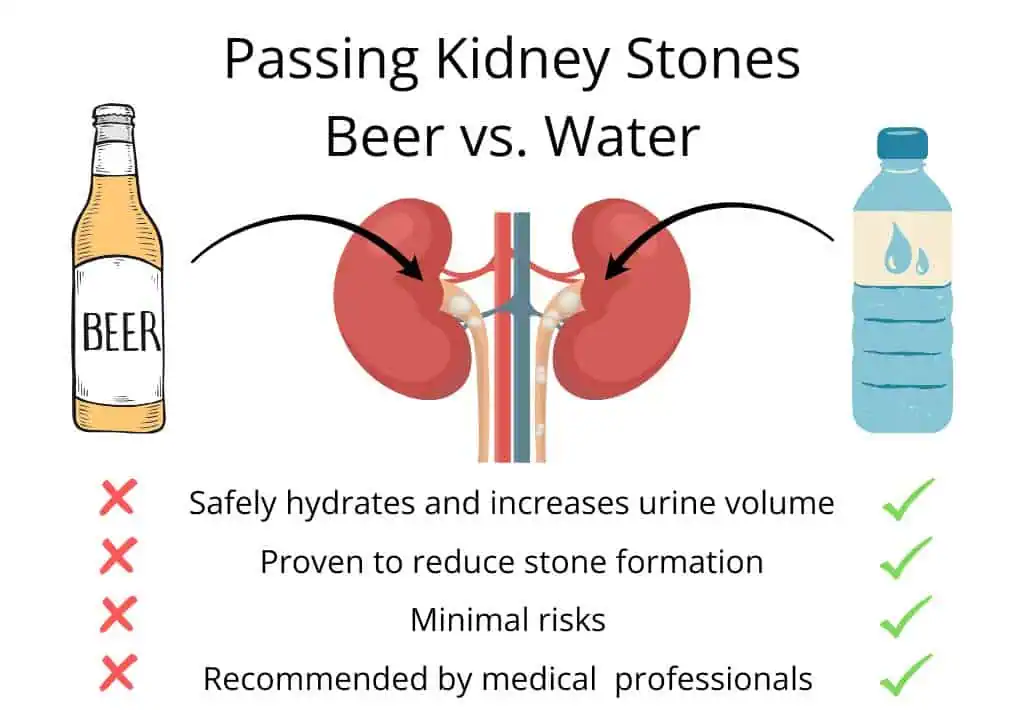
When it comes to kidney stones specifically, alcohol can change how your body handles fluids. Because of this, doctors don’t recommend drinking beer as a way to treat or prevent kidney stones. Additionally, beer isn’t a scientifically supported or reliable treatment method, therefore doctors cannot ethically prescribe it as a treatment.
Dehydration
Even though beer can make you urinate more, it doesn’t necessarily mean it is a great option to keep you hydrated. Alcohol is a diuretic, which means it can cause your body to lose more water than you take in – if you drink a lot of it. This can lead to dehydration. When you don’t have enough water in your body, your urine becomes more concentrated. Concentrated urine makes it easier for kidney stones to form.
Uric Acid Stones
Some types of kidney stones are made of uric acid. Beer has a compound called “purines” in it. Our body breaks purines down into uric acid. Drinking beer frequently can raise the amount of uric acid in your blood and urine. This can increase your chance of getting uric acid kidney stones, which can be painful. This could also increase your risk of gout.
Weight Gain & Metabolic Consequences
Beer has calories and drinking it regularly could lead to weight gain. Also, drinking beer often can affect how your body uses sugar and fats, which might cause other health problems. All of these things together can increase your risk for kidney stones and other metabolic health conditions.
Reliance On The Remedy
Some people might think that if beer helps them pass kidney stones once, it’s a good treatment. But this can be dangerous. Relying on beer instead of proper medical care or healthy habits can make things worse. It’s important to follow the advice of doctors and drink plenty of water instead.
Is Beer Good For Kidney Stones?
Short Answer: Not Really
Although some people think beer might help with kidney stones, the risks often outweigh the possible benefits. While an occasional alcoholic beverage is usually okay for people with kidney stones, it shouldn’t be seen as a treatment for kidney stones.
But can I drink beer with kidney stones?
The Centers for Disease Control (CDC) recommends limiting alcohol to no more than 1 drink per day for women (or 2 drinks/day for men) to avoid to health consequences of too much alcohol. These same guidelines apply to people with kidney stones.
More on other types of alcohol and kidney stones.
Long Answer
Beer may make you urinate more, but the alcohol in it can also dehydrate you if you drink a lot of it, which is the opposite of what you want for kidney stone prevention. It can also contribute to high uric acid levels and cause weight gain — both of which can make stones more likely.
Even if beer does slightly lower the risk of kidney stones, it’s not a safe or healthy solution. There is no reason to think beer is any better than other beverages for kidney stones. There are far better, proven ways to lower your risk of kidney stones that don’t come with the side effects of alcohol. It’s always best to focus on healthy hydration and eating habits instead of hoping beer will do the trick.
Nutrition For Kidney Stone Prevention
The best way to prevent kidney stones is to focus on your urine risk factors. Kidney stone nutrition is different for every single person. However, the goal for everyone is to keep your urine diluted (or less concentrated). The best way to do this is to drink plenty of fluids to flush away minerals before they clump together and make kidney stones.
Here are some of the most common nutrition strategies to prevent kidney stones:
- Drink enough water every day: Most people with kidney stones should aim for about 3 liters of fluid (or, about 100 fluid ounces). Water should be your main drink.
- Limit salt (sodium): Too much salt can make your kidneys put more calcium into your urine, which can cause calcium kidney stones. If you have high urine calcium, limit dietary sodium to not more than 2,300mg/day.
- Get enough calcium from food: Foods like dairy products or fortified plant milks can help prevent oxalate kidney stones. Calcium in food binds with oxalate from healthy foods in your intestines, ultimately lowering urine oxalate levels.
- Eat plenty of fruits and vegetables: They provide potassium, magnesium, and citrate — all of which help prevent the most common types of kidney stones.
- Limit sugary drinks: Regular soda, sweet tea, and other sugar-sweetened drinks can raise the risk of kidney stones.
- Don’t overdo animal protein: Eating too much meat, poultry, or seafood can raise uric acid and acid urine levels, which can lead to uric acid or calcium oxalate kidney stones.
The bottom line? Water, a balanced diet, and smart lifestyle choices are the most reliable ways to prevent kidney stones — no beer required.
Interested in meeting with a kidney stone dietitian? Work with us for a personalized, effective nutrition plan to prevent kidney stones!
You can also book a FREE call with one of our kidney stone dietitians to learn more about the services we have to help you!
Happy eating!
Melanie
