Whereas there is no known connection between kidney stones and thyroid disease, there is a clear (and common!) link between hyperparathyroid disease and kidney stones. Let’s break it down in plain English.
Table of Contents
What Does the Thyroid Do?
Your thyroid is a small gland in your neck that plays a big role in many different systems in your body. It makes hormones that control metabolism and energy levels. Thyroid hormones also affect heart, gut, and muscle function.
Hyperparathyroidism vs. Thyroid Disease
Here’s where things get a little confusing. When people talk about “thyroid and kidney stones,” they’re often mixing up thyroid disease with parathyroid disease.
Parathyroid glands are four tiny glands located right next to your thyroid. Their main job is to regulate calcium balance in your body. They do this by secreting parathyroid hormone, which causes the release of calcium from bone to keep calcium blood levels at healthy levels.
Parathyroid hormones are crucial for healthy bones, and controlling levels of calcium, phosphorus and vitamin D.
Kidney Stones and Hyperparathyroidism
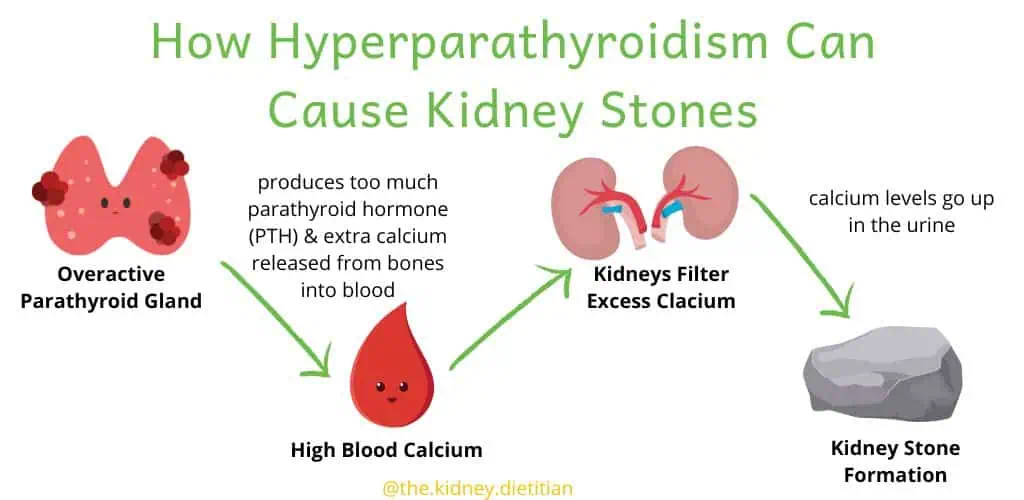
The problem with kidney stones happens when the parathyroid gland makes too much parathyroid hormone – a condition called hyperparathyroidism. (1)
When this happens, too much calcium is released from the bone. Much of this calcium ends up in your urine, where it can form calcium kidney stones. Hyperparathyroidism is a major risk factor for kidney stones. (2) In fact, kidney stones are often the first symptom of hyperparathyroidism.
An estimated 55% of people with primary hyperparathyroidism also have kidney stones. (3)
If you’ve had more than one kidney stone, your doctor should order a 24-hour urine collection to assess your specific urine risk factors for forming more kidney stones, including urine calcium levels.(4) Very high urine calcium levels (more than ~300mg/day) could be a sign of parathyroid problems.
A Closer Look at Hyperparathyroidism
There are two types of hyperparathyroidism: primary and secondary hyperparathyroidism. Primary hyperparathyroidism is common (it occurs in 1 in 500-100 people) and is commonly associated with kidney stones. Secondary hyperparathyroidism involves hyperplasia of the gland, and occurs mostly in people with chronic kidney disease (CKD).
Symptoms of primary hyperparathyroidism include:
- Muscle weakness
- Fatigue
- Depression
- Recurrent kidney stones
- Aches in bones and joints
Unsurprisingly, bone health is a big concern for people with hyperparathyroidism. If not treated, it can cause osteopenia, osteoporosis and a higher risk of bone fractures.
Treatment Options for Hyperparathyroidism
The good news? Hyperparathyroidism is very treatable. And for many people, treating it can significantly lower, or completely eliminate, their risk of more kidney stones. Here are the main approaches:
1. Surgery (Parathyroidectomy)
For severe cases of hyperparathyroidism, the removal of part or all of the parathyroid gland is recommended. This surgery is usually very effective at treating both hyperparathyroidism and kidney stones. Most of the time, urine calcium levels go back to normal after surgery, and people do not form more kidney stones.
2. Medications
If surgery isn’t an option (due to health risks or personal preference), medications can help manage calcium levels:
- Calcimimetics (like cinacalcet) trick the parathyroid glands into making less hormone.
- Bisphosphonates are often used to help protect bones.
Can Other Thyroid Diseases Cause Kidney Stones?
Other thyroid issues—like hypothyroidism (low thyroid hormone), hyperthyroidism (overactive thyroid) or hypoparathyroidism (low parathyroid hormone production) are not directly linked to kidney stones.
What To Do If You Have Kidney Stones and Thyroid Problems
If you’re dealing with both, don’t panic! You are not alone.
It is very important to get tested! Monitoring your 24-hour urine test and parathyroid hormone (PTH) levels are key.
A 24-hour urine test is crucial to identify the cause of kidney stones and come up with an effective treatment – hyperparathyroidism or not! This test not only can reveal very high urine calcium and possible thyroid disease – it can also be used to make sure your risk of kidney stones goes down after parathyroid disease treatment.
If you have high urine calcium on a 24-hour urine test, parathyroid hormone (PTH) levels should be checked to see if you have hyperparathyroidism.
The good news is that treating hyperparathyroidism is relatively easy and effective. In many cases, kidney stones stop after parathyroid hormone levels return to normal.
Diet & Lifestyle Still Matter!
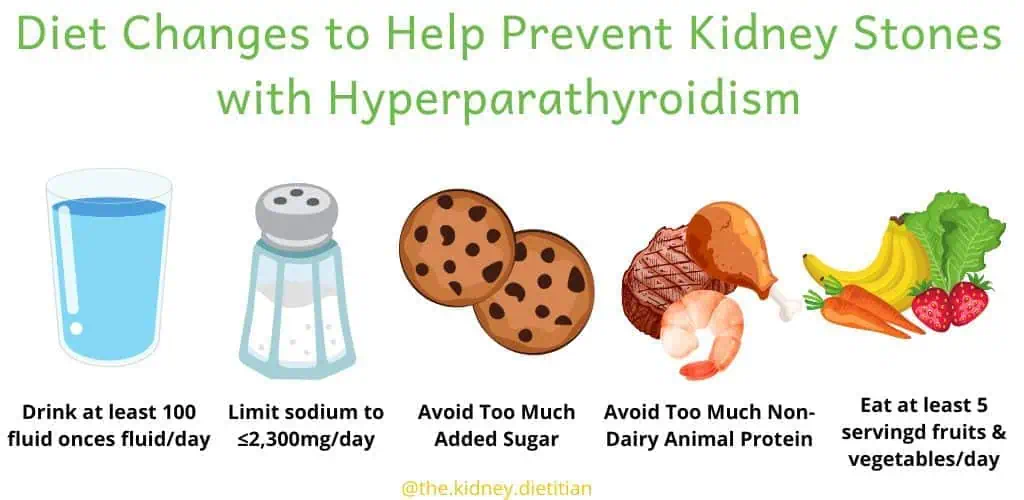
Nutrition is powerful. Even if parathyroid disease is at play, diet changes can still lower your risk of kidney stones.
Avoiding too much sodium, added sugar and non-dairy animal protein can all help lower urine calcium levels. It is also good practice to avoid excess calcium and vitamin D supplements (unless prescribed by your doctor) – as these can also increase urine calcium.
The Bottom Line
When it comes to kidney stones and thyroid, the real player is usually the parathyroid glands, not the thyroid itself. If you’ve had more than one kidney stone, especially calcium stones, it’s worth asking your doctor about checking your blood calcium and PTH levels.
And remember—nutrition plays a huge role in stone prevention no matter what’s going on with your thyroid. That’s where I come in!
👉 Want to learn more about preventing kidney stones through food? Learn more about how to work with us!