
This article was written by dietetic student Lavanya Chhetri & reviewed by Melanie Betz MS, RD, CSR, FNKF, FAND.
Who doesn’t love an ice cream cone or a bowl of frozen yogurt (chock full of ALL the toppings, of course!?). But have you ever wondered what the difference is between frozen yogurt and ice cream? A registered dietitian weighs in on the difference between these popular and flavorful desserts!
Table of Contents
What Is Frozen Yogurt?
Frozen yogurt is a popular dessert made with yogurt. It has a creamy texture with a sweet and tangy taste.
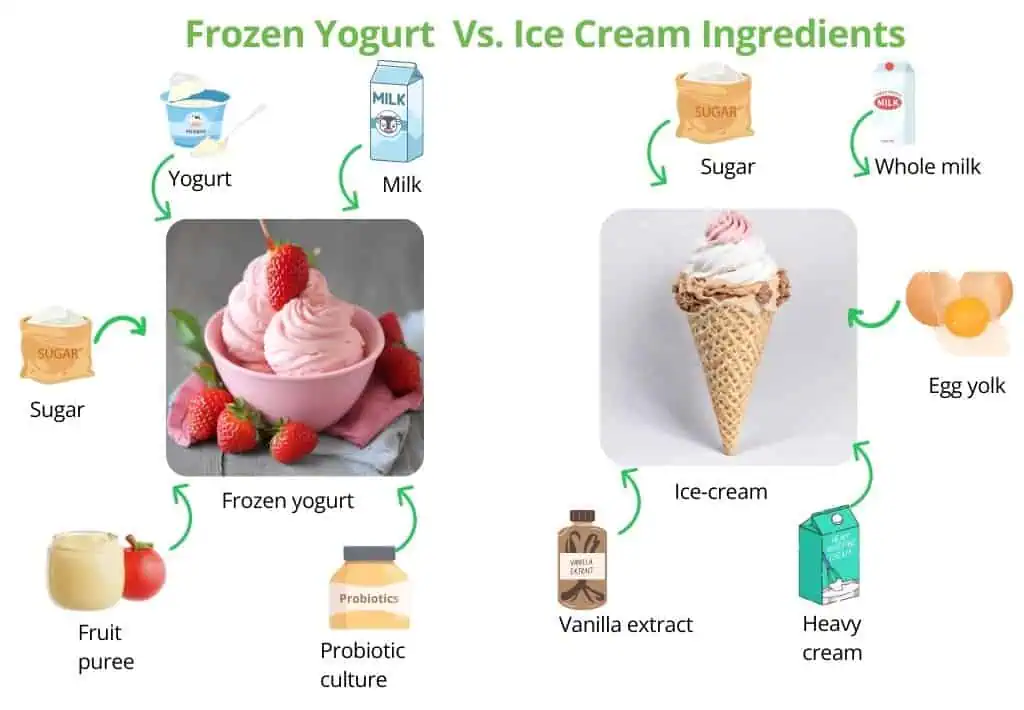
The main ingredients in frozen yogurt are:
- Milk: This can be liquid milk or powder milk. Powdered milk is called “milk solids” on the ingredient list.
- Yogurt cultures: These are good bacteria like Lactobacillus bulgaricus and Streptococcus thermophilus.
- Sugar: Typically regular ol’ cane sugar!
- Other Ingredients: Many frozen yogurts also contain ingredients like flavorings and stabilizers to improve their taste, texture and shelf-life.
What Is Ice Cream?
Manufacturers make ice cream from milk, cream, and sugar. They flavor it with spices, fruit, or other ingredients. People around the world know ice cream for its creamy texture and wide variety of flavors.
Frozen Yogurt vs Ice Cream: How They Are Made
Frozen Yogurt
The process of making frozen yogurt starts by making yogurt! Milk is pasteurized to kill harmful bacteria, then beneficial yogurt cultures (yes, bacteria!) are added. The mixture is cooled and the bacteria work their magic, turning the milk into a tangy, creamy yogurt.
Manufacturers then add sugar, salt, flavorings, and stabilizers to achieve that signature frozen yogurt sweetness and texture. They freeze the mixture and often incorporate air to create the right consistency.
Ice Cream
Manufacturers make ice cream from dairy, typically using pasteurized cream instead of milk. That cream doesn’t have added cultures that would turn it into yogurt.
To make ice cream, manufacturers pasteurize heavy cream, sugar and other flavorings, then “spin” the mixture to incorporate the right amount of air and create ice crystals to get that signature ice cream flavor and creamy texture.
After this step, manufacturers then add in toppings like chocolate chips, nuts or fruit!
Frozen Yogurt vs Ice Cream: Taste & Texture
In term of taste and texture, the choice between frozen yogurt and ice cream often comes down to personal preference. Ice cream is generally lighter and creamier, while frozen yogurt has a slight tanginess from the yogurt.
The texture also differs because manufacturers generally add more air during the churning process, making ice cream fluffy and light. Frozen yogurt is generally more dense than ice cream, providing a smoother, more consistent texture.
Frozen Yogurt vs Ice Cream: Ingredients
Cream vs Yogurt
A key difference between frozen yogurt and ice cream is their base ingredients. While both contain dairy, frozen yogurt uses yogurt as a base, while regular ice cream uses cream.
This change results in a significant difference in fat content. Ice cream usually has more fat considering the cream is higher in fat than yogurt.
Live Cultures
Another difference between frozen yogurt and ice cream is the presence of live cultures in frozen yogurt. Manufacturers typically use Lactobacillus bulgaricus or Streptococcus thermophilus bacteria to make both yogurt and frozen yogurt.
These cultures, also known as probiotics, are beneficial bacteria that may improve gut health. These bacteria are what gives yogurt, and by extension, frozen yogurt, it’s slightly tangy taste.
However, there is no regulation around how much bacteria must be present in frozen yogurt. Therefore, there may not be enough bacteria in the final product to offer health benefits.
Frozen Yogurt vs Ice Cream: Key Nutritional Differences
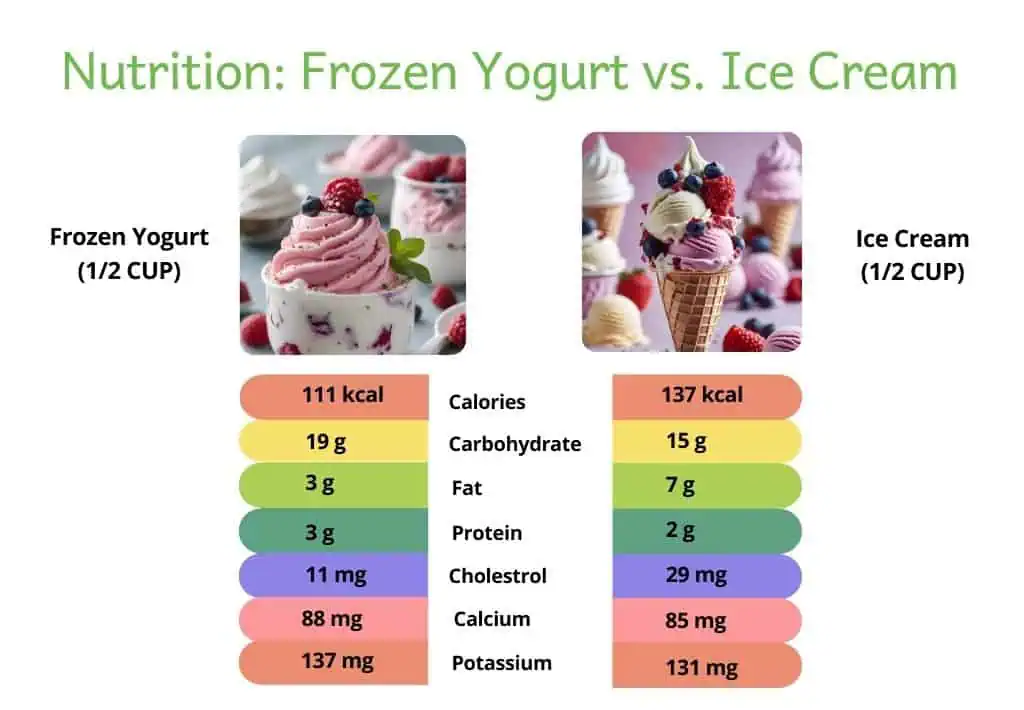
Generally, frozen yogurt meets most criteria for the “healthier” option. Frozen yogurt typically contains fewer calories, total fat and saturated fat than ice cream. Plus, the live cultures in frozen yogurt, that are not found in ice cream, may offer additional health benefits, such as improved digestive health.
Of course, the healthiness of ice cream or frozen yogurt largely depends on how manufacturers make each one and what ingredients they use. Portion size and topping will also affect the overall nutritional content.
Nutrition Facts: Frozen Yogurt vs Ice Cream
| Nutrient | Vanilla Frozen Yogurt (1/2 cup) | Vanilla Ice Cream (1/2 cup) |
|---|---|---|
| Calories | 111 | 137 |
| Carbohydrates (g) | 19 | 15 |
| Fiber (g) | 0 | 0 |
| Added Sugar (g) | 18 | 14 |
| Fat (g) | 3 | 7 |
| Saturated Fat (g) | 2 | 4.5 |
| Cholesterol (mg) | 11 | 29 |
| Protein (g) | 3 | 2 |
| Sodium (mg) | 55 | 53 |
| Calcium (mg) | 88 | 85 |
| Potassium (mg) | 137 | 131 |
| Phosphorus (mg) | 78 | 69 |
Lactose Intolerance and Dairy Sensitivities
If you struggle with lactose intolerance or dairy sensitivity, frozen yogurt might be the better option for you! The cultures and process used to make yogurt reduce the amount of lactose. So, many people can tolerate yogurt better than cream or milk.
Is Frozen Yogurt Healthier Than Ice Cream?
In general, people often consider frozen yogurt to be ‘healthier’ than ice cream. But, as always, it is important to consider your specific health goals and your overall dietary pattern when deciding if one thing is “healthier” for you.
Here are some things to consider:
Added Sugar
Frozen yogurt often has more added sugar than ice cream. If you have diabetes or insulin resistance, you might want the lower sugar option.
You can even look for reduced sugar or “no sugar added” varieties.
Lower Fat
If you are limiting your fat intake or managing high cholesterol, frozen yogurt will be a better choice for you as it is typically lower in both total and saturated fat.
Calcium
Both frozen yogurt and ice cream are moderately good sources of calcium, which is critical for both bone health and the prevention of calcium oxalate kidney stones.
Gut Health
Those probiotics in frozen yogurt might offer benefits to gut health. If this is a priority for you, frozen yogurt might be a better option than ice cream.
At the end of the day, there are not huge differences in the nutritional content of frozen yogurt and ice cream. Both are very high in added sugar and are a delicious, creamy treat! As always, ALL foods can fit in a healthy, well-balanced diet.
Tips For Choosing Healthier Frozen Desserts
Looking for a healthier frozen treat, but not sure what to pick? No worries! There are plenty of options in the supermarket freezer aisle that can satisfy your sweet tooth without derailing your health goals. Here are some smart tips to follow to make better choices.
Portion Size
No matter what you pick, if you eat 10 scoops of it, it will be difficult to stay within the daily limits of nutrients like added sugar and saturated fat.
Added Sugar
The American Heart Association recommends no more than 25g (6 teaspoons) of added sugar per day for women and 36g (9 teaspoon) for men. Eating too much added sugar can contribute to chronic conditions like heart disease and kidney stones.
Frozen desserts will certainly have added sugar – so be sure to be mindful of how much added sugar you are eating in the other foods that day!
If frozen yogurt or ice cream are not your prefered dessert, this low sugar apple crumble is another great option!
Saturated Fat
The Dietary Guidelines for Americans recommend limiting saturated fat to less than 10% of total daily calories – that’s about 20 grams per day on a 2,000 calorie diet. Too much saturated fat can raise LDL (bad) cholesterol levels, which may increase the risk of heart disease.
Frozen desserts inherently have saturated fat in them – so be sure to check out the label to see how much is in your frozen dessert to help you fit it in your daily saturated fat goals.
Add More Nutrition!
Dessert is a great opportunity to slip in some extra nutrition! Both fruit and nuts provide a rich source of vitamins, minerals, and fiber. Top either your frozen yogurt or ice cream with these fun toppings for some extra nutrition.
Other Frozen Desserts: Italian Ice, Gelato & Sorbet
Gelato
Gelato is a worldwide famous Italian dessert. For many, gelato elicits images of walking through Italian streets and gorgeous displays of heaping gelato flavors in a gelato shop window.
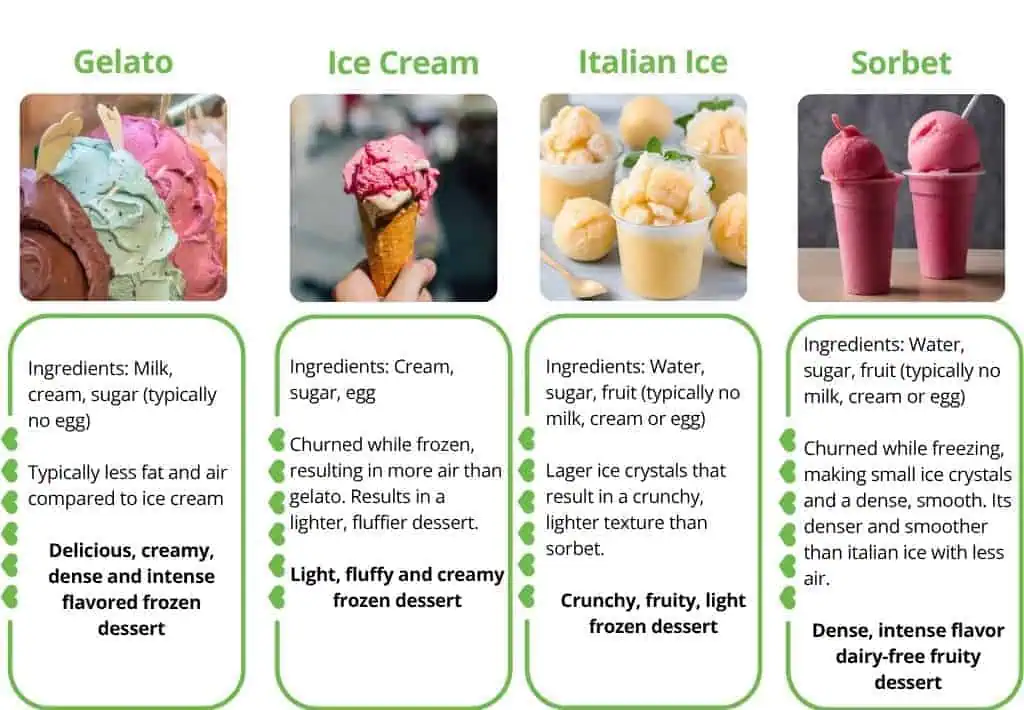
It is similar to ice cream, but generally has less cream and more milk. It also almost never includes egg, and manufacturers churn it more slowly than ice cream, incorporating less air. The result is a dense, rich, and smooth frozen dessert.
Restaurants often serve gelato warmer than ice cream, which can make it creamier and bring out more flavor.
Sorbet
Because sorbet is a dairy-free frozen dessert, people make it with just water, sugar, and fruit juice or puree. They churn sorbet while it freezes to give it a smooth texture, just like ice cream.
Sometimes, manufacturers add a little alcohol to make it even smoother, since alcohol doesn’t freeze easily.
Since sorbet does not have dairy or fat, sorbet typically has fewer calories and less fat than both gelato and ice cream.
This watermelon lime sorbet is a fan favorite during those hot summer days!
Italian Ice
Despite its name, Italian Ice is an American creation, created by Italian immigrants in the early 20th century. Italian Ice contains water, sugar, fruit puree or juices, and occasionally natural or artificial flavoring.
Italian ice has larger ice crystals and is mixed slower, giving it an icier and crunchier feel than sorbet. It also has more ice and less fruit, which is why it is lighter than sorbet and often times has fewer calories.
The Verdict: Frozen Yogurt vs Ice Cream
These fan favorite desserts differ in more than just their name. From how they are made to the taste and texture, frozen yogurt and ice cream have their own components that make them popular desserts.
Struggle with high potassium, but still want a tasty evening treat? No worries! Check out these low potassium dessert options – including low potassium ice cream!
Watching your sodium intake? There are plenty of low sodium desserts that you can still enjoy!
When selecting your next dessert, consider these factors as well as your personal health goals!
If you’ve enjoyed this article, check out these other kidney-friendly desserts at The Kidney Dietitian!
Happy eating!
Melanie

Hi, I currently have CKD & need to be on a renal diet; however, I have an intolerance to wheat. I am having difficulty eating with these two conditions. Can you help me?
Thanks,
Dianne
Hi Diane! Absolutely! You can 100% eat to protect your kidneys and avoid wheat, if necessary. I’d recommend booking a free call with our dietitian to learn more about how we can help you!