If you have calcium kidney stones, your bones deserve attention too.
Most people think kidney stones sort of exist in a vacuum and aren’t related to other health conditions. But for many people, kidney stones are a sign something else is going awry. Calcium kidney stones are closely connected to bone health.
That means preventing stones should never be only about avoiding pain, surgery, or another ER trip. It should also be about protecting your bones and reducing the risk of other chronic conditions like high blood pressure, chronic kidney disease and heart disease.
And here is the good news: many of the same nutrition habits that help prevent calcium kidney stones also support strong bones – and reduce the risk of most other chronic conditions!
Table of Contents
The Link Between Bones & Calcium Kidney Stones
The most common kidney stones are made of calcium, usually calcium oxalate or calcium phosphate. Many people assume this means they have “too much calcium” and should avoid it.
NOTHING could be further from the truth. In fact, low calcium diets can increase the risk of calcium kidney stones by 50%! (1)
In many cases, the issue is where calcium is going. Instead of staying in bones, where we want it, calcium gets lost in the urine. This increases kidney stone risk and may also impact bone mineral density over time.
Research has found that people with kidney stones have a higher risk of low bone density and fractures. (2)
This is one reason I care so much about personalized kidney stone prevention. We are not just trying to stop the next stone. We are thinking about all aspects of your health.
Why Does This Happen?
There are many possible reasons someone may have both kidney stone risk and bone concerns, including:
- Genetics
- High urine calcium (hypercalciuria)
- High sodium intake
- Low fruit and vegetable intake
- High dietary acid load from certain eating patterns
- Hormonal issues – especially hyperparathyroidism
- Low vitamin D
- Certain medications
- Chronic under-eating or restrictive diets
This is why random advice from the internet is not enough. Your stone prevention plan should be based on your 24-hour urine test results, medical history, labs, what you are already eating, and overall nutrition needs.
Nutrition Habits That Help Both Bones & Kidney Stones
Here is where things get exciting: bone health nutrition and kidney stone nutrition overlap a lot.
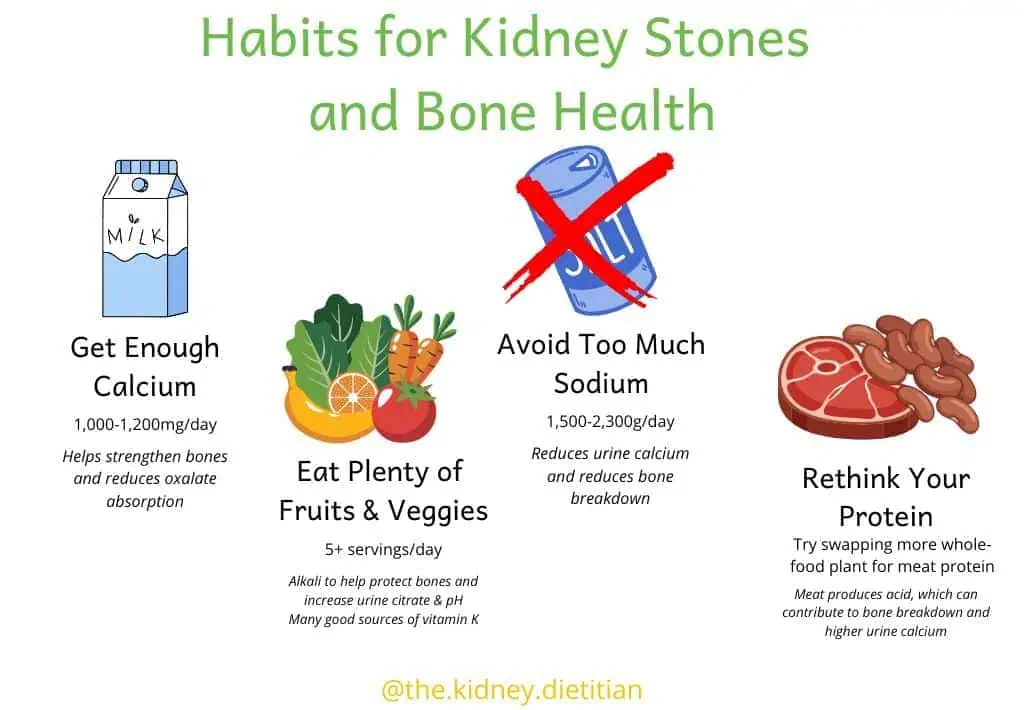
1. Avoid Excess Sodium
Too much sodium can increase calcium loss in the urine. That will raise kidney stone risk and may also negatively impact bones. (3)
Eating the right amount of sodium is one of the most effective nutrition strategies for many people with calcium stones. (4) Most people should aim for 2,300mg sodium per day – the same amount recommended for general health.
To keep sodium in check, focus on:
- Eating restaurant meals less often – these tend to be a BIG source of sodium in our diets
- Eating packaged convenience foods less often or more strategically paired with lower sodium foods
- Reading nutrition labels for sodium – you may be surprised at how much sodium is hiding in there!
- Cooking more at home when possible
Most of the sodium we eat isn’t from the salt shaker. Nearly 80% of the salt in our diet comes from sodium already in our food – primarily packaged and processed foods. Focusing on choosing lower-sodium options or limiting these types of foods tends to make the biggest impact on getting sodium down.
2. Eat Plenty of Fruits & Vegetables
Fruits and vegetables provide potassium, magnesium, fiber, and natural alkali compounds that support both kidney stone prevention and bone health. They will help lower dietary acid load, which can help prevent the most common types of kidney stones, and protect your bones. (5) (6)
Unfortunately, many people with kidney stones are scared away from eating many fruits and vegetables because of oxalate. However, low-oxalate diets are outdated and have not been shown to reduce kidney stones. (7) Instead, the focus should be on reducing how much oxalate gets absorbed from the healthy foods you eat, primarily by eating enough calcium, not totally avoiding oxalate altogether.
3. Avoid Excess Animal Protein & Swap in Plant Proteins
You do not need to avoid meat completely. But, eating a lot of non-dairy animal protein from foods like beef, pork, chicken, fish and seafood can increase urine calcium and lower urine citrate — two things that can increase calcium kidney stone risk in vulnerable people.
The connection between meat, kidney stones and bone health boils down to dietary acid load. Meat produces a lot of acid during metabolism. If you eat a lot of meat, especially without plenty of alkali-producing fruits and vegetables to balance it, your overall diet will produce acid. This high acid load promotes bone breakdown, higher urine calcium and lower urine citrate.
Eating more plant protein in place of animal protein is a great way to lower dietary acid load. Plant proteins like beans, nuts, seeds or tofu have a much lower acid load. Even eating a few more vegetarian meals a week can make a big difference! Worried about the oxalate in these foods – check out this article!
The exact amount of protein right for each person is very different. Protein needs are based on body size, lifestyle, other medical history and other nutrition goals.
4. Get Enough Calcium
This one is huge. Adequate calcium is KEY for both calcium kidney stones and bone health.
Eating more calcium can feel counterintuitive if you have calcium kidney stones, or high urine calcium levels. But, eating enough calcium with your meals can significantly reduce how much oxalate you absorb, reducing risk of kidney stones. (8) Plus, that calcium is obviously critical for bone health.
Time and time again, research shows that people who eat more calcium have a lower risk of kidney stones. (1)
The recommended amount of calcium is the same for preventing/treating bone disease and calcium kidney stones – 1,000 – 1,200mg/day.
Calcium: Not All Sources Are Equal
In our supplement-happy culture, it is normal to jump right to calcium supplements for bone health. But, for most people with calcium stones, getting calcium from food is ideal.
Why? Although diets that include lots of foods naturally high in calcium, there is some concern that calcium supplements could increase kidney stone risk. Natural calcium doesn’t seem to increase urine calcium levels nearly as much as calcium supplements. (9) Since most people are making kidney stones because of high urine calcium, this is an important point!
It is relatively easy to get enough calcium from food if you are intentional about it.
Great Food Sources of Calcium
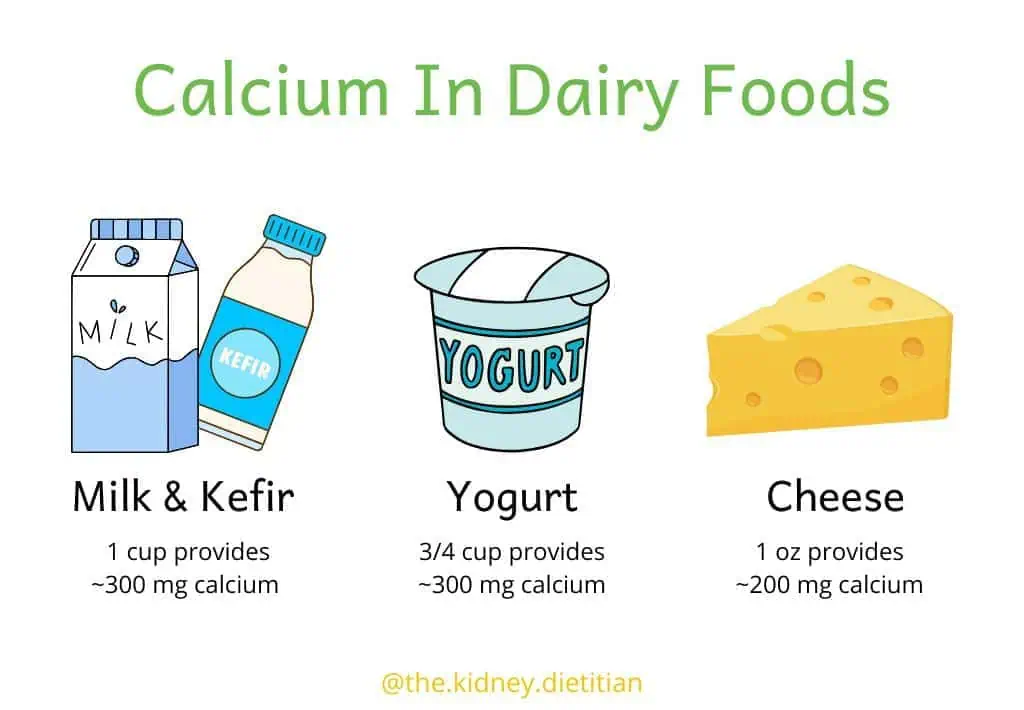
It is often easier than people think to meet calcium needs from food. Aiming for 2-3 servings of calcium-rich foods with meals will get most people to our goal of 1,000-1,200mg calcium per day – the amount of calcium recommended for kidney stone prevention, bone health AND general health.
Examples of calcium-rich foods include:
- Milk (1 cup)
- Yogurt (1/2 – 3/4 cup)
- Cheese (1 ounce)
- Fortified soy milk (1 cup)
- Calcium-set tofu (3 ounces)
- Fortified plant milks (3/4-1 cup)
- Sardines with bones (3 ounces)
What About Calcium Supplements?
It is best for most people with kidney stones to avoid calcium supplements, and get calcium from actual food. This is because of the concern of higher urine calcium and increased stone risk with calcium supplements. (10)
However, calcium supplements can absolutely be a good fit for some people with kidney stones. Most notably, people who are forming kidney stones because of enteric hyperoxaluria, common after gastric bypass surgery or other malabsorptive conditions. In this case, stone formation is often driven only by high urine oxalate, not high urine calcium, so calcium supplements might be helpful in meeting calcium needs.
Taking calcium supplements with meals may help reduce urine calcium spikes and kidney stone risk.
Ultimately, the right plan for calcium is different for everyone, and it is important to work with a registered dietitain to learn what is best for you!
Vitamin D Matters Too
Vitamin D helps your body absorb calcium and plays an important role in bone health. Low vitamin D is common. But supplementation should be thoughtful, especially for people with kidney stones.
Evidence does NOT strongly link vitamin D supplementation to kidney stones. (11) However, there is concern that long-term high-dose vitamin D supplementation can increase urine calcium – especially if taken WITH calcium supplements. (12) But, it is important to correct vitamin D deficiency.
Bottom line: test, do not guess. IF you have low vitamin D levels, it is appropriate to take supplements in most cases. Work with your doctor to re-test and adjust supplements as appropriate.
What About Vitamin K?
Vitamin K is a hot topic in both bone health and kidney stones. It is important for bone health because it helps activate proteins, most notably osteocalcin, that help mineralize bones. For kidney stones, vitamin K is involved in many proteins that help inhibit calcium kidney stones.
However, trials have not consistently shown that vitamin K supplements are beneficial for improving bone density (13) or reducing fractures. (14) There have been very few trials in kidney stones and vitamin K. One very small study found that vitamin D supplementation reduced urine calcium. (15)
More research is needed to understand who would benefit from vitamin K supplements and how much should be taken.
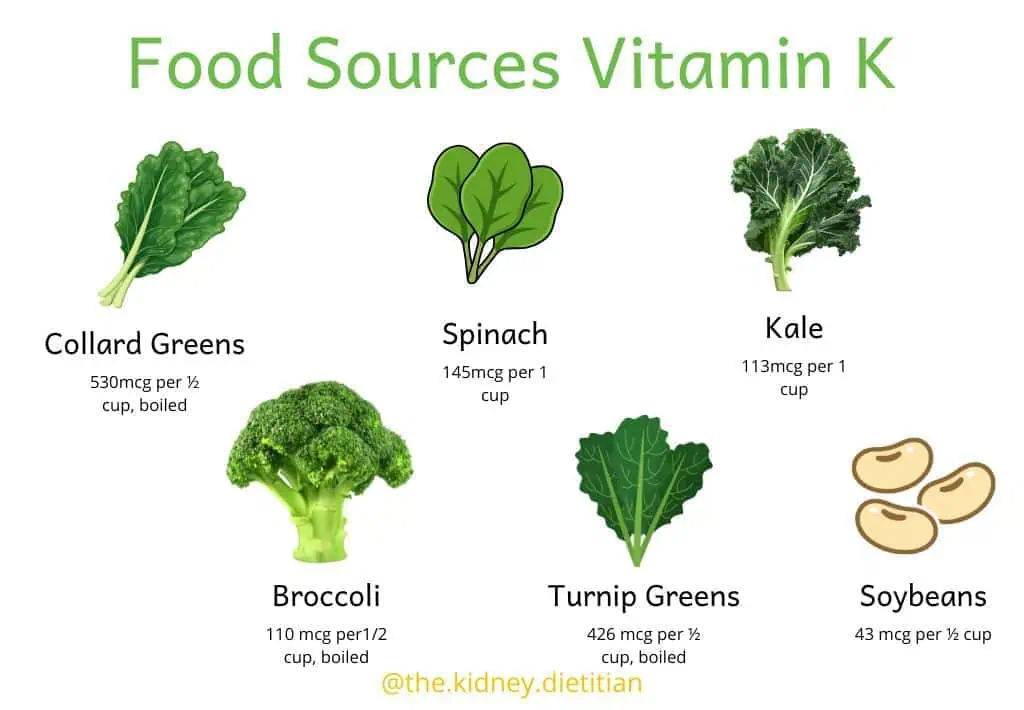
For now, it makes sense to be sure to at least get enough vitamin K from food. Only about 50% of people in the United States are getting enough vitamin K. (16) The Adequate Intake for vitamin K is 120mcg/day for men, and 90mcg/day for women. Note that a single serving of leafy green vegetables provides your entire day for vitamin K.
Good food sources of vitamin K include:
- Leafy greens
- Broccoli
- Brussels sprouts
- Cabbage
- Fermented foods (some forms)
If you take blood thinners such as warfarin, talk with your healthcare team before changing vitamin K intake.
One Kidney Stone Diet Does Not Fit Everyone
This is perhaps the MOST important message. Not everyone with kidney stones should eat the same thing. In fact, not everyone with the same TYPE of kidney stone should eat the same thing.
For kidney stone nutrition to actually work, it is key to figure out what is CAUSING your kidney stones – this is where that 24-hour urine test comes in. This will tell us WHY you are making stones, so you have
If you haven’t had a 24-hour urine test, be sure to grab my FREE talking tips to ask your doctor for this test!
Protect Your Bones and Prevent Stones
You should not have to choose between bone health and kidney stone prevention. In fact, the right nutrition plan often supports both.
If you want to know exactly what your body needs, we’d love to help.
Work With Us
We help people prevent kidney stones and address ALL of thier nutrition concerns – including bone health! You can work directly with a kidney dietitian. Or, our course Kidney Stone Nutrition School walks you through your 24-hour urine test to identify exactly what is causing your stones, and know exactly HOW to change your diet to prevent stones for YOU!
Happy Eating!
Melanie