This article was written by dietetic student Rose Lazer & reviewed by Melanie Betz MS, RD, CSR, FNKF, FAND.
You’re at the urologist. They tell you that you form calcium phosphate kidney stones. You do some research, and it seems that nobody else has the same kind of stones you do. Every website you visit and every person you meet gives you different advice on how to prevent making more stones. You don’t know who to trust. You feel helpless. Are stones in the cards forever?
Having kidney stones can be a confusing experience, especially with calcium phosphate kidney stones, which are not very common. Luckily, there is still plenty that you can do to help prevent getting more stones!
Nutrition is often a key part of kidney stone prevention that is not usually mentioned at the urologist’s office. The food on your plate can play a role in calcium phosphate kidney stones too! Healthy eating to prevent kidney stones can seem overwhelming. There is a lot of conflicting information online that is not based on quality science. What does a healthy kidney stone diet even look like anyway?
Table of Contents
Calcium Phosphate Kidney Stones: FAQ
Prevention for calcium phosphate stones depends on why you are forming them. A 24-hour urine test will help you and your doctor know what that is. For most people, high urine calcium and/or low urine citrate drives calcium phosphate kidney stones. You can reduce urine calcium
Many different things can cause calcium phosphate kidney stones. Genetics, dehydration, low fluid intake and hyperparathyroidism are some of the most common causes.
If you can relate to any part of this experience, keep reading to learn about what the science says you can do to prevent calcium phosphate kidney stones!
What Are Calcium Phosphate Kidney Stones?
Calcium phosphate stones are exactly what they sound like: calcium and phosphate. When they bind in the urinary tract, they form hard mineral deposits that can cause blockages and pain.
Calcium phosphate stones can be either apatite or brushite stones. These are different types of calcium phosphate kidney stones. Brushite is known to be exceptionally hard to break down. No matter which kind you have, your nutrition plan can be tailored to reduce your risk of forming more stones.
Calcium Phosphate vs. Calcium Oxalate Kidney Stones
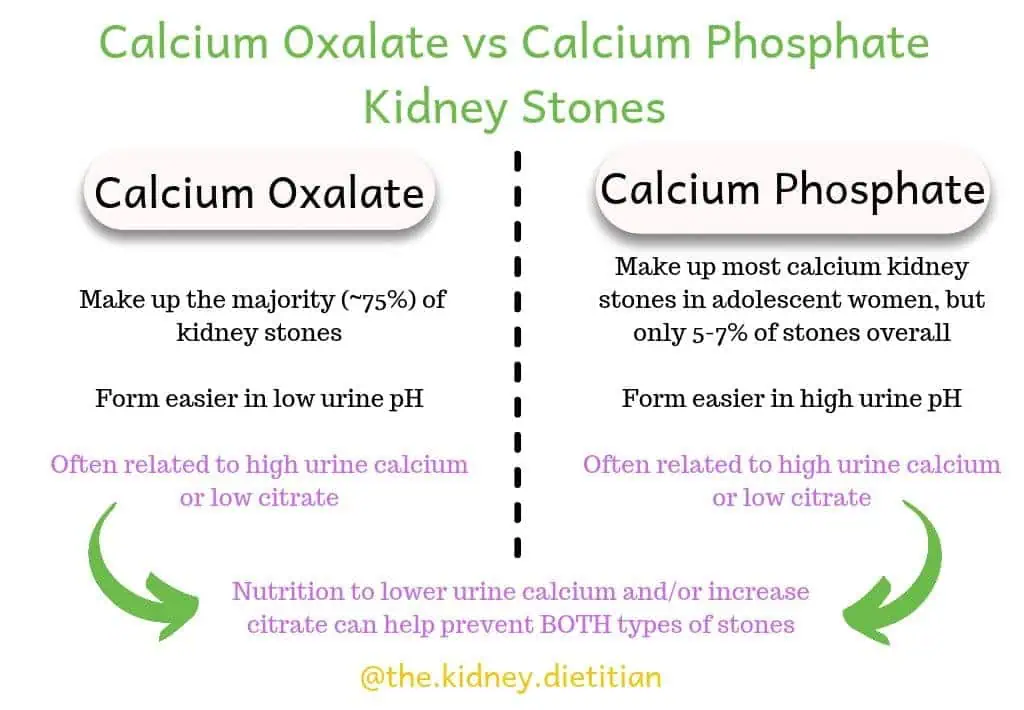
When researching calcium phosphate kidney stones, you may have noticed that there is a lot more information on calcium oxalate kidney stones. This is because calcium oxalate is the most common type of kidney stone. 80% of calcium stones are calcium oxalate stones. (1) Calcium oxalate stones are made up of calcium and oxalate rather than calcium and phosphate.
Kidney stones can also be made of a combination of both calcium phosphate and oxalate! And, the type of stone people make can change over time. Many of the risk factors for calcium oxalate kidney stones are the same as the risk factors for calcium phosphate kidney stones. In fact, high urine calcium is the most common cause of both calcium phosphate and calcium oxalate kidney stones. For many people, good nutrition to prevent one kind of calcium stone is good for another.
What Causes Calcium Phosphate Kidney Stones?
Many different things make calcium phosphate kidney stones more likely. The reason for forming stones is different for everyone!
Here are some of the more common urine risk factors for calcium phosphate kidney stones. A 24-hour urine test is key to know which urine risk factor(s) you have!
Low Urine Volume
No matter what kind of kidney stone you have, low urine volume is a risk factor. Low urine volume means that your urine is more concentrated, making it easier for minerals that can form stones to bind.
High Urine Calcium
More calcium in your urine means there is more calcium available to form either calcium phosphate or calcium oxalate kidney stones. Lower urine calcium means a lower risk of calcium kidney stones. Note: high urine calcium does not mean you should avoid eating calcium-rich foods!
Both diet and medication can be helpful in reducing urine calcium levels. Thiazide diuretics are commonly used to help lower urine calcium.
Low Urine Citrate
Citrate binds to calcium in urine, preventing that calcium from forming a kidney stone. Low citrate means that more of the calcium in your urine is free to bind to stone-forming minerals.
Both diet and medication can help increase urine citrate.
High Urine pH
This is unique to calcium phosphate kidney stones. High urine pH is the perfect environment for calcium and phosphate to bind to make kidney stones. Low urine pH is a better environment for calcium oxalate or uric acid kidney stones to form.
Who Is At Higher Risk?
Certain groups are at higher risk for developing calcium phosphate kidney stones. You may be forming stones because you are a member of one of these groups, which is out of your control!
Women and Calcium Phosphate Kidney Stones
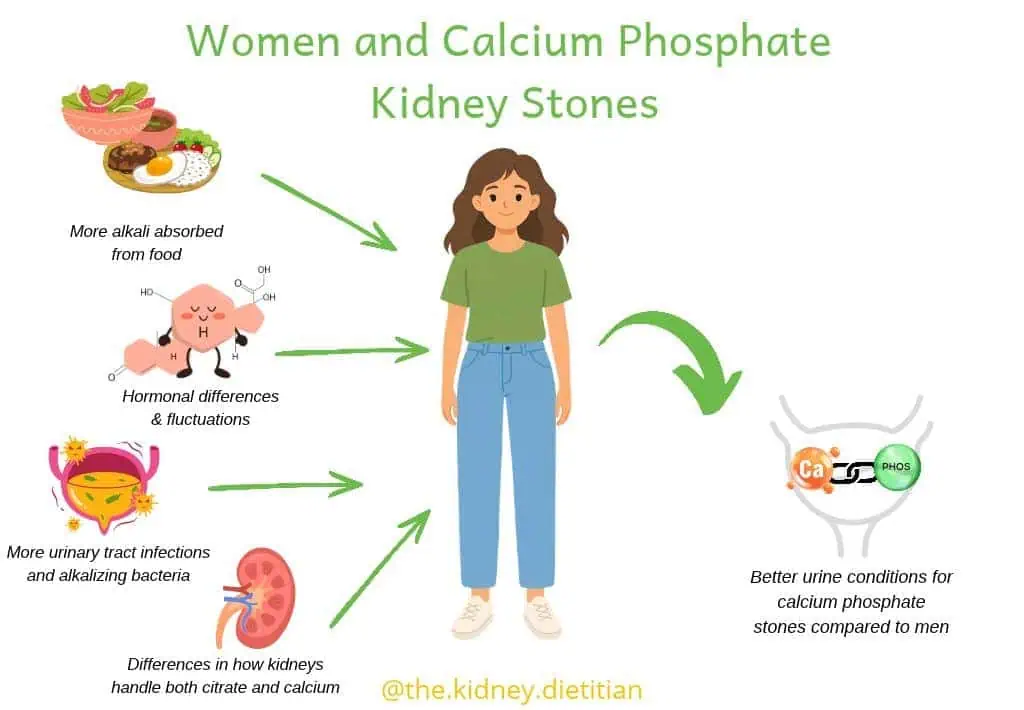
Calcium phosphate kidney stones are the most common kidney stone type in very young women. One study found that 65% of kidney stones in women ages 10-19 are calcium phosphate, and more young women get kidney stones than young men. (2)
Women tend to have higher urine pH than men – increasing risk of calcium phosphate kidney stones. Women absorb more alkali from food, which makes urine pH higher. This is NOT because of what food is being eaten. This has been shown to happen regardless of what the food is!
Renal Tubular Acidosis and Calcium Phosphate Kidney Stones
Renal tubular acidosis (RTA) is a condition that can contribute to kidney stones. The kidneys are unable to remove acid from the body properly. This often causes high urine pH, low urine citrate, and high urine calcium – all risk factors for calcium phosphate kidney stones.
Primary Hyperparathyroidism and Calcium Phosphate Kidney Stones
When you have hyperparathyroidism, there is too much parathyroid hormone in the body. This pulls calcium from your bones. The kidneys try to balance this by getting rid of excess calcium in urine. All that extra urine calcium is a risk factor for both calcium phosphate and calcium oxalate kidney stones.
If you have very high urine calcium on a 24-hour urine test, ask your doctor to check your parathyroid hormone levels.
Why You Need a 24-Hour Urine Test
Since everyone has different reasons for forming calcium phosphate kidney stones, it is important to figure out exactly what is causing them for YOU. This is what a 24-hour urine test will tell you. You can receive an order for a 24-hour urine test from your doctor, typically your urologist or nephrologist.
To complete a 24-hour urine test, you will need to collect all of your urine for 24 hours. Your doctor will give you exact instructions on when to start and stop your collection. You will receive specific instructions on the process and dropping off your collection. Make sure to follow the instructions carefully so the laboratory is able to evaluate your urine. You don’t want to collect it for nothing!
What Does a 24-Hour Urine Test Tell Me?
A 24-hour urine test will show exactly what is in your urine and in what amounts. The test can show if you have any of the common urine risk factors for calcium phosphate kidney stones: low urine volume, high urine calcium, low urine citrate, or high urine pH.
Once you know your specific reasons for forming stones, you can start adjusting your diet to improve them. Your doctor may also prescribe medication based on your urine test.
Nutrition Goals to Prevent Calcium Phosphate Stones
Once you know your individual risk factors for calcium phosphate stones, you can come up with a personalized plan to prevent them! There are certain dietary changes you can make that address urine risk factors you may have found in your urine test.
Drink Lots of Fluid
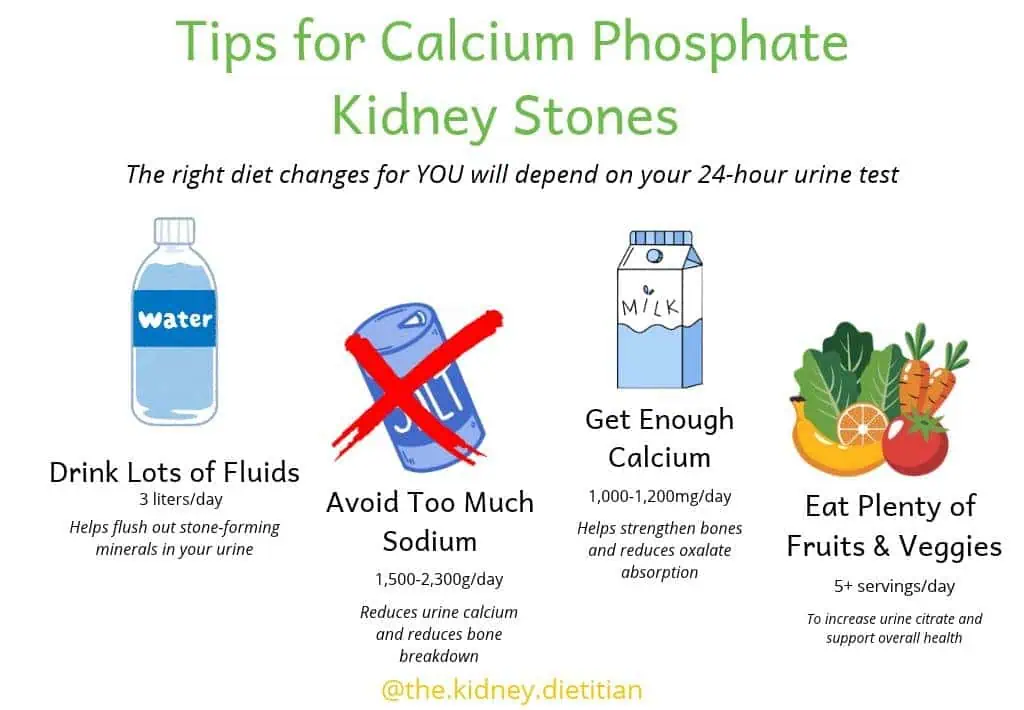
As you have probably heard countless times, drink more water! If you have low urine volume (less than 2 ½ liters), that means you need to drink more fluids to keep everything flushing through. A more concentrated urine gives the minerals more opportunity to bind.
While all fluids “count,” sugar-sweetened beverages like regular soda or punch can increase the risk of kidney stones. (3) If you aren’t the biggest fan of plain water, try these alternatives.
Limit Sodium
Eating a lot of sodium can increase urine calcium. If your urine test shows you have high urine calcium, the most important thing to focus on is avoiding too much sodium.
Sodium is hidden in a lot of foods and can sneak up on you throughout the day. Most of the salt we eat is already in our foods! Try to limit processed foods that have a lot of sodium, and cook with other herbs and spices instead of salt. There are many yummy low-sodium recipes you can find here at The Kidney Dietitian!
Eat Enough Calcium
When people hear they have calcium kidney stones, they may think they need to cut out calcium in their diet. However, this can make things worse!
Dietary calcium does not significantly increase urinary calcium. Diets with enough calcium can actually significantly reduce risk of kidney stones. Eating enough calcium reduces how much oxalate is absorbed. Even with calcium phosphate kidney stones, this is important to keep in mind because the type of stone you form can change over time.
Eating calcium is also important for bone health, and people who get calcium kidney stones are at increased risk of osteoporosis. (5) For most people with calcium phosphate kidney stones, the recommended daily amount of calcium, about 1,000-1,200mg per day, is a good goal.
It is best to consume calcium from food sources rather than supplements, as they have been shown to increase urinary calcium. (5)
Eat Plenty of Fruits and Vegetables!
When researching kidney stones, you may see some advice about limiting certain fruits and vegetables. Many of these lists are of “high oxalate foods.” However, a low oxalate diet for kidney stones is outdated. Updated kidney stone guidelines do not recommend limiting dietary oxalate. (6) Many people do not even have high urine oxalate, and strictly limiting healthy plant-based foods because they have oxalate can be harmful.
Fruits and vegetables tend to raise urine pH, while meat tends to lower it. However, you should not reduce the amount of fruits and vegetables you eat to prevent calcium phosphate kidney stones. Fruits and vegetables are healthy for many functions in the body! Fruits and some vegetables can also help raise urine citrate, which can help prevent calcium kidney stones.
Increasing meat consumption to lower urine pH can increase stone risk, in addition to other health issues. Eating a balanced diet is better than cutting out food groups entirely.
Unfortunately, high urine pH is largely genetic, and trying to eat more acid-producing foods (aka, eating fewer fruits and veggies and/or eating more meat) to change it is not worth the health risk. It could also end up making calcium phosphate stones worse by reducing urine citrate and increasing urine calcium. If your 24-hour urine test says you have high urine pH, look for the other kidney stone risk factors you may have and target those instead of the urine pH.
Conclusion
If you have calcium phosphate kidney stones, there are ways to help reduce your risk of having more. Once you have done your 24 hour urine test, you can see what may be causing your stones and adjust what you are eating and talk to your doctor about medication accordingly.
Many times, you can ADD foods to your diet rather than take your favorite foods away to make your diet more kidney stone-friendly. You can (and should!) reduce your risk of kidney stones and enjoy eating all at the same time.
Work with us to come up with a personalized diet and lifestyle plan to prevent calcium phosphate kidney stones for you!
Happy Eating!