
This article was written by dietetic student Ayah Jarad & reviewed by Melanie Betz MS, RD, CSR, FNKF, FAND.
The market is flooded with ‘stone breaker’ supplements that claim to dissolve or prevent kidney stones. Do these work? In short: not really. But, sometimes kidney stone supplements could be helpful. There is a lot of nuance to this topic. Read on to learn more about stone breaker supplements and who might benefit from them.
Table of Contents
Why Kidney Stone Supplements Are So Popular
Unfortunately, repeated kidney stones are common. Anyone who has had kidney stones knows how painful they are. Therefore, it is only natural for sufferers to want a quick and painless solution to get rid of terrible kidney stones.
The cost of supplements may seem cheaper than ER and hospital visits, especially when it’s a recurring problem.
The reality of kidney stone prevention is nuanced and not a one-size-fits-all approach. This “grey” area can be stressful and misunderstood by people with kidney stones. Prescriptions may also come with undesirable side effects, making “natural” remedies seem more favorable.
Manufacturers profit from this literal pain, using marketing strategies that promise their supplements can dissolve and stop kidney stones. The fear of past experiences and anxiety of recurrence drives the appeal for stone breaker supplements.
This is why the popularity of kidney stone supplements has surged among kidney stone sufferers. Unfortunately, there isn’t good evidence that stone breaker supplements work for everyone.
What’s Actually In ‘Stone Breaker’ Supplements?
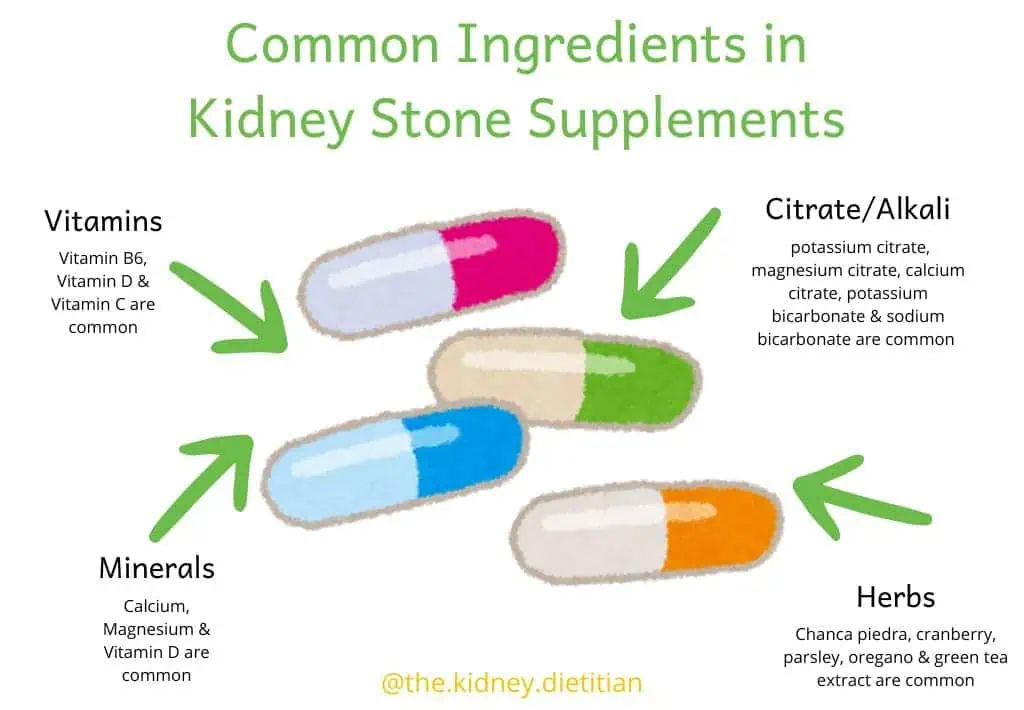
There are many different “stone breaker” supplements available. Most products contain a combination of citrate compounds, minerals, vitamins, and herbal ingredients.
Citrate or Alkali Compounds
Alkaline compounds are nearly universal in stone breaker supplements. Common examples include potassium citrate, magnesium citrate, calcium citrate, potassium bicarbonate, and sodium bicarbonate.
These ingredients are designed to increase citrate levels in the urine and make the urine less acidic (increase urine pH). Citrate is important because it can help prevent calcium kidney stones from growing. However, not everyone with kidney stones has low urine citrate, or is forming stones due to low citrate levels. In fact, large doses of citrate (or alkali) could be harmful for people with high urine pH, potentially increasing risk of calcium phosphate stones.
Minerals
Many supplements contain minerals such as magnesium, potassium, and calcium. These minerals may help lower stone risk in different ways.
For example, magnesium may help reduce oxalate stone formation by binding oxalate in the gut and urine. Calcium may help by binding oxalate in the digestive tract before it is absorbed. Potassium is a source of alkali, so may help increase urine citrate and urine pH.
Vitamins
Some kidney stone supplements contain vitamins such as vitamin B6, vitamin D, and vitamin C.
Vitamin B6 is often included because it may help reduce oxalate production in the body. However, research does not consistently show that vitamin B6 supplements help prevent kidney stones. (1) (2)
Vitamin D is a common ingredient in stone breaker supplements because it is involved with bone health and calcium metabolism. However, its role in kidney stone prevention is less clear and large doses may increase stone risk. (3)
Vitamin C is commonly marketed for its antioxidant properties, but excessive vitamin C supplementation may actually increase stone risk in some individuals because it can be converted to oxalate in the liver. (4)
Herbal and Plant Extracts
Many kidney stone supplements also have herbal ingredients. One of the most common is Chanca Piedra (Phyllanthus niruri), often marketed as “Stone Breaker.” Although there are some promising trials with calcium oxalate kidney stones, but more studies are needed to know how much is needed, for exactly who it works, and how much is needed. (5) (6)
Other herbal ingredients commonly found in kidney stone supplements include cranberry, parsley, oregano, and green tea extract. However, there is currently very little to no research showing these herbs help kidney stones. (7)
Common Kidney Stone Supplements
| Product | Main Ingredients | Intended Purpose | Evidence |
| Moonstone (affiliate link) | Potassium citrate, sodium bicarbonate, citrate salts | Increase urine citrate and urine pH | Small (10 participants) study found increased urine citrate and urine pH, as well as reduced calcium oxalate supersaturation. (8) |
| Litholyte | Potassium citrate, magnesium citrate, sodium bicarbonate | Increase urine citrate and urine pH | Small (10 participants) trial found significant increase in urine pH and non-significant increase in urine citrate. (9) |
| KSP tabs | Potassium citrate, magnesium citrate | Increase urinary citrate and provide alkali | Small (10 participants) trial found significant increases in urine pH and citrate. (9) |
| Kidney COP | Herbal blend (including Phyllanthus niruri/”Stone Breaker”) | Marketed to support kidney stone prevention and passage | No published clinical trials. |
| LithoBalance | Potassium citrate, magnesium citrate, vitamin B6, herbal ingredients | Increase citrate and support urinary health | No published clinical trials. |
| TheraLith XR | Potassium citrate, magnesium citrate, vitamin B6 | Increase citrate and reduce crystal formation | No published clinical trials. |
| NOW Potassium Citrate | Potassium citrate | Increase urinary citrate and alkali load | No published clinical trials. Provides potassium citrate, the same active ingredient used in prescription therapy, but provided in a different form which may impact absorption, release of medication, and purity – all of which may impact urine changes and/or stone prevention. |
Many kidney stone supplements are designed to change urine chemistry by increasing urine citrate or making urine less acidic. While these changes may be helpful for some people, they do not necessarily mean a supplement will prevent future kidney stones. Prescription potassium citrate has been shown to reduce stone recurrence in certain patients, but most over-the-counter supplements have not been studied to the same extent. This doesn’t mean they don’t work—it simply means we have less evidence to support their use. (7)
Supplements Are Not Always Safe
There are several issues you should consider before grabbing that supplement bottle that promises you quick and painless treatment.
Supplements Are Not Regulated
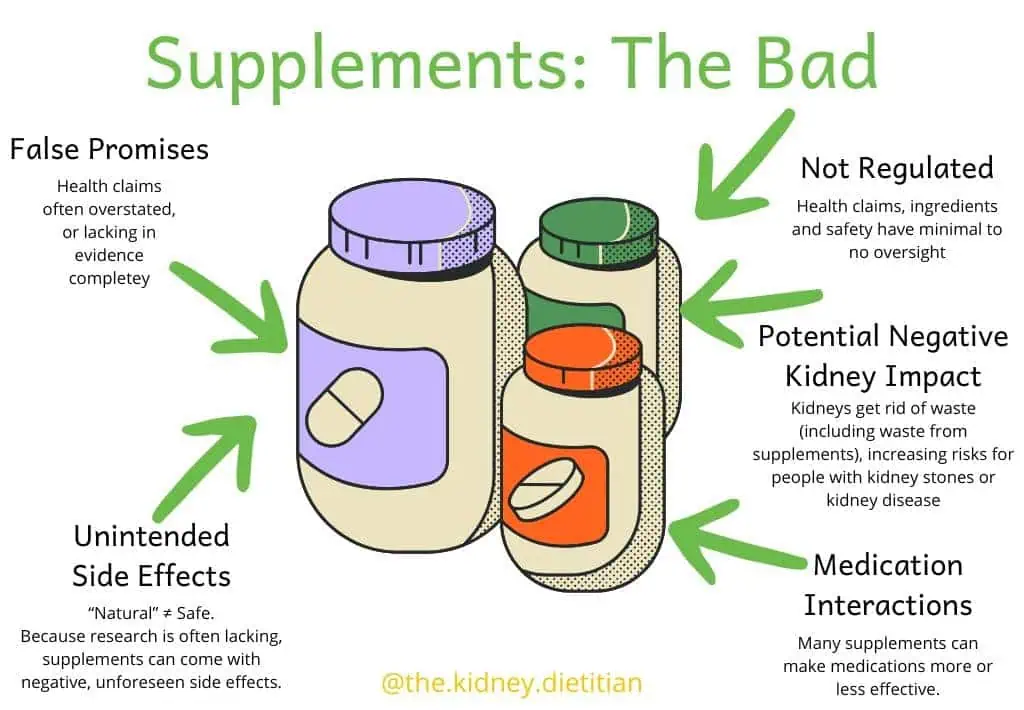
Unlike prescription medications, dietary supplements are not regulated by the FDA. This means the quality, purity, and amount of active ingredients can vary between products—even within the same brand. As a result, a supplement may not always contain exactly what is listed on the label, and may have other ingredients not listed.
Health claims on supplements are also not tightly regulated. Marketers are GOOD. Essentially, supplement companies can make it seem like their product can do almost anything. Do not be fooled by health claims on supplements.
Your Kidneys May Be Working Overtime
Supplements may seem safe because they are “natural.” Natural compounds are not always safe or good for us. Arsenic? Natural. Mercury? Natural. Plus, your kidneys still have to filter and remove everything you consume, including supplements.
Taking unnecessary supplements—or several at once—may place extra strain on the kidneys, especially in people with kidney disease or kidney stones. That’s why it’s important to talk with your healthcare provider before starting any supplement.
Potential Medication Interactions & Negative Side Effects
Some kidney stone supplements can interact with prescription medications. For example, potassium-containing supplements may increase potassium levels when taken with certain blood pressure medications or diuretics. Magnesium and some herbal ingredients may interfere with how your body absorbs certain medications.
A big benefit of regulated pharmceuticals is the assessment of unintended side effects. Again, just because something is “natural” does not make it safe. Because supplements are not regulated, there may be unforeseen side effects.
Always check with your healthcare provider before starting any supplement.
Potential Side Effects
Although supplements are often marketed as natural, they can still cause side effects. Natural does not mean safe.
Common side effects include nausea, diarrhea, bloating, stomach upset, and changes in potassium levels. Supplements may change urine chemistry in harmful ways, increasing risk of kidney stones for some people.
This doesn’t mean kidney stone supplements should never be used. Some may benefit certain stone formers, but they are not a one-size-fits-all solution. The best approach is to understand why you make kidney stones (ideally with a 24-hour urine test), and work with your healthcare provider to come up with the right treatment.
Cost
Cost is another important consideration. Many kidney stone supplements cost $20–60+ each month, yet most have limited evidence showing they prevent stone recurrence. Before spending money on a supplement, ask your healthcare provider whether it addresses your specific stone risk factors and whether a more evidence-based or cost-effective option is available.
Spending that money on some extra fruits and vegetables each week is often a much better use of that money!
Not All Kidney Stones are the Same
Stone breaker supplements do not typically specify which type of kidney stone they help. Or, more importantly, which urine parameter they help. Kidney stone supplements are fraught with claims to “dissolve kidney stones naturally” or “stop kidney stones”, which ignore the nuance and complexity of kidney stone formation.
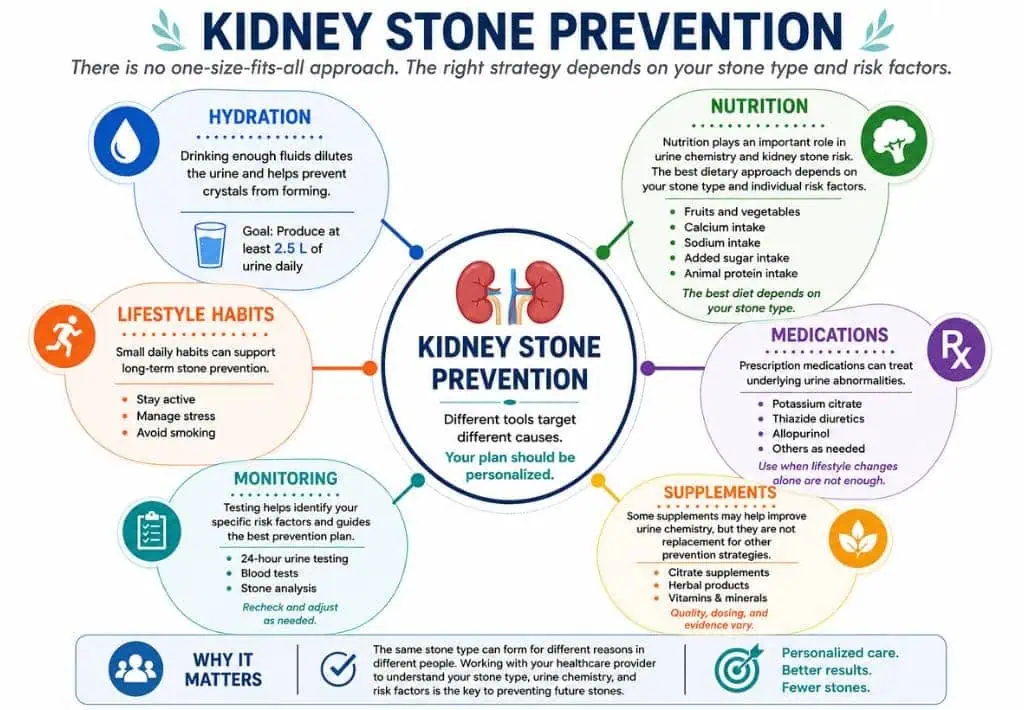
Not all kidney stones are the same. And, the same type of kidney stone can form for very different reasons in different people. For any kidney stone treatment to work, you need to know what your urine risk factors are, measured by a 24-hour urine test.
Kidney stones form when certain substances in urine become too concentrated and harden. Types of stones form for different reasons in different people. So, treatment and prevention strategies are different from one person to another, and one stone to another.
Types of Kidney Stones
Calcium Oxalate Kidney Stones
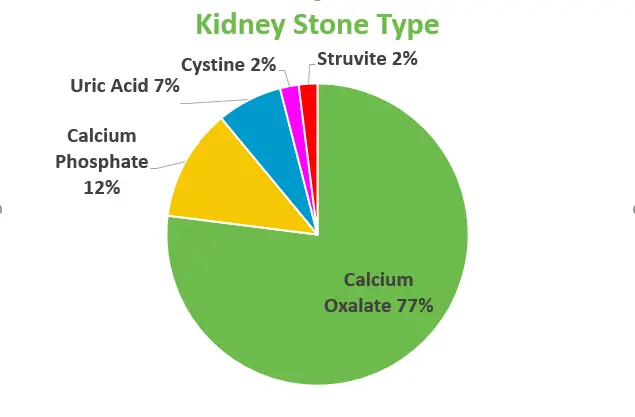
These are the most common type of stones, and they form when calcium combines with oxalate in the urine. Possible risk factors include high urine calcium, high urine oxalate, low urine citrate, and low urine volume. Low urine magnesium may also come into play.
Dietary factors such as high sodium intake, inadequate calcium intake, and not eating enough fruits and vegetables may also contribute to calcium oxalate stones.
Uric Acid Kidney Stones
Uric acid kidney stones form when urine is too acidic – low urine pH – and they are more common in people with gout, metabolic syndrome, and diabetes.
Eating a lot of meat, fish or poultry is a big dietary factor for many people with uric acid kidney stones.
Calcium Phosphate Kidney Stones
These stones are less common than calcium oxalate stones and are usually associated with high urine pH, high urine calcium and/or low urine citrate.
Many of the same dietary strategies are useful for calcium phosphate stones as for calcium oxalate kidney stones. It is important to look at your 24-hour urine test to know what is best for you.
Struvite Kidney Stones
These are also called “infection stones” because they usually form after recurrent urinary tract infections (UTIs). Treatment should focus on preventing and treating these infections to reduce the risk of developing struvite kidney stones.
Cystine Kidney Stones
These are rare stones caused by a genetic disorder called cystinuria – in which an excess of the amino acid cystine is released into the urine
Urine Risk Factors
Even people with the same stone type can have different risk factors. For instance, two people can have calcium oxalate stones, but the reason they form stones may be completely different.
Understanding why you form kidney stones with a 24-hour urine test is the first step to figure out how to prevent them, and if stone breaker supplements are appropriate.
Common Medications For Kidney Stone Prevention
There are several medications that physicians prescribe for kidney stone prevention. The most common are potassium citrate and thiazide diuretics.
Potassium Citrate
Potassium citrate is one of the most commonly prescribed medications for kidney stone prevention. It is a source of alkali, and is often used for low urine citrate levels and/or acidic urine. It works by increasing urine citrate levels and increasing urine pH. This makes is harder for uric acid and calcium oxalate kidney stones to form. In some cases, increasing urine pH can dissolve uric acid kidney stones.
Citrate helps prevent stone formation by binding to calcium, so that calcium can no longer bind to oxalate or phosphate and make kidney stones.
Thiazide Diuretics
Thiazide diuretics are also commonly prescribed for kidney stone prevention. Common examples include hydrochlorothiazide (Microzide®), chlorthalidone (Thalitone®), and indapamide (Lozol®). These medications help the kidneys reabsorb more calcium back into the bloodstream, reducing the amount of calcium in the urine and lowering the risk of calcium kidney stones.
Importance of Monitoring
For both medication and diet changes, urine chemistry needs to be monitored to make sure treatment is working. Potassium levels also may need to be checked. Watch for possible side effects and talk about these with your physician. They can help change your regimen to make life more comfortable.
Bottom Line
Kidney stone supplements can be useful for some people, but they are not a one-size-fits-all solution.
The most well-studied supplement used for kidney stone prevention is potassium citrate, which has been shown to reduce stone recurrence in certain stone formers. However, potassium citrate should be recommended based on urine risk factors, not for everyone with kidney stones, or even everyone with a particular type of kidney stone.
Many kidney stone “breaker” supplements contain ingredients that, in theory, change or improve urine chemistry. However, urine chemistry should be reviewed before employing any kidney stone prevention strategy. The ingredients in kidney stone supplements may not necessarily be present in adequate amounts or type to make a real impact.
Most importantly, supplements should not replace a comprehensive stone workup, nutrition and lifestyle changes, or prescription medications. For many people, adequate fluid intake, reducing sodium intake, consuming enough calcium, and eating a diet rich in fruits and vegetables remain the foundation of kidney stone prevention. For many, prescription medications like thiazide diuretics or potassium citrate are necessary to change urine chemistry enough to actually prevent kidney stones.
Ultimately, the best approach is not finding the “perfect” supplement—it’s understanding why you form stones in the first place. Working with your healthcare provider to identify your stone type and urine risk factors can help determine whether a supplement is appropriate and what other medications or nutrition and lifestyle strategies may be most effective for preventing future stones.