This article was written by dietetic student Ayah Jarad & reviewed by Melanie Betz MS, RD, CSR, FNKF, FAND.
A warm and comforting bowl of ramen doesn’t come with a full day’s worth of sodium. This Thai-inspired spicy coconut lime ramen is packed with flavor from fresh garlic, ginger, sesame oil, coconut aminos, lime juice, and vegetables while keeping sodium in check.
Whether you are following a kidney-friendly diet, working on lowering blood pressure, or simply trying to eat less salt, this homemade ramen is a delicious alternative to ramen from a restaurant or package.
*Please note that this post contains clearly identified affiliate links. If you click on these links and choose to make a purchase, I may receive a commission (at no cost to you).
Table of Contents
Why Traditional Ramen Is So High In Sodium
Traditional ramen often contains sodium from:
• Seasoning packets
• Broth concentrates
• Soy sauce
• Toppings such as cured meats, fish cakes, and other packaged ingredients that can add significant amounts of sodium
Many instant ramen products contain 1,000–2,000 mg of sodium per package. Considering that the general recommendation is to consume less than 2,300 mg of sodium per day, one bowl of instant ramen can provide nearly half—or even most—of your daily sodium allowance.
Making ramen at home gives you much more control over the ingredients. Using lower-sodium products along with flavorful ingredients like garlic, ginger, mushrooms, lime juice, and coconut aminos can help create a delicious bowl of ramen without excess sodium.
Why You’ll Love This Low-Sodium Ramen Recipe
This Thai-inspired spicy coconut lime ramen is lower in sodium than many restaurant or instant ramen options while still delivering plenty of flavor. The combination of garlic, ginger, coconut aminos, lime juice, and light coconut milk creates a broth that is creamy, savory, and slightly spicy.
Packed with vegetables and protein-rich eggs, this recipe makes a satisfying meal that can easily be customized with your favorite vegetables or protein source. Best of all, it comes together in about 30 minutes, making it a great option for both busy weeknights and meal prep.
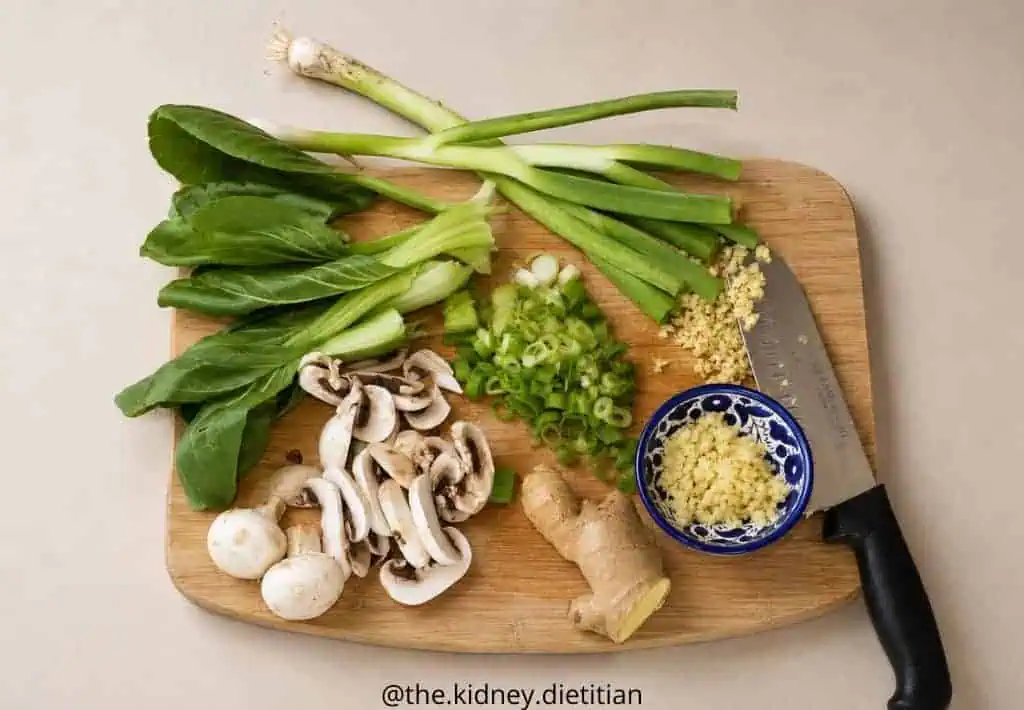
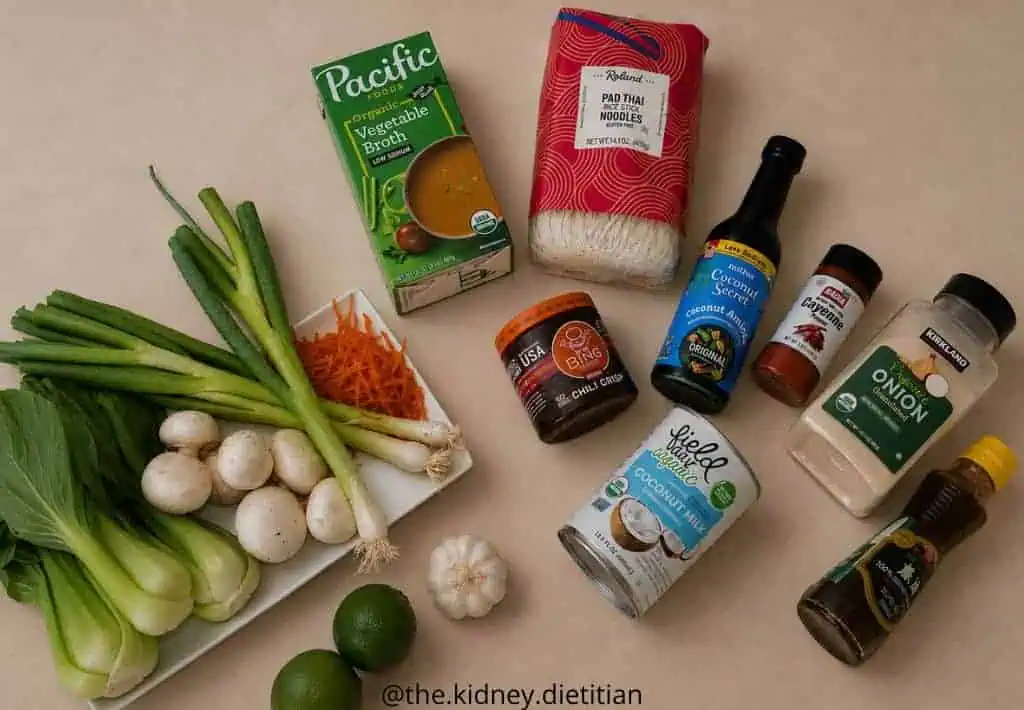
Ingredients You’ll Need
Rice Noodles
Thin rice noodles provide the classic ramen noodle texture, and are naturally low in sodium. They cook quickly and absorb the flavorful broth beautifully. Rice noodles are also a great option for anyone following a gluten-free diet.
Not all noodles are created equal when it comes to sodium. Some noodle varieties, including certain packaged udon noodles, can contain surprisingly high amounts of sodium before any broth or seasonings are added. When choosing noodles for a lower-sodium meal, be sure to check the Nutrition Facts label and compare sodium content between brands. Starting with a lower-sodium noodle can help keep the overall sodium content of your ramen in check.
No-Salt Added Vegetable Broth
The broth serves as the foundation of any good ramen recipe. I used a no-salt-added vegetable broth to keep the sodium content low while allowing the flavors of the garlic, ginger, coconut aminos, and lime to shine.
You can also use a no-salt-added or low-sodium chicken broth, or any other low-sodium broth you prefer. Just be sure to compare Nutrition Facts labels, as sodium content can vary widely between brands.
Vegetables
This recipe uses baby bok choy, mushrooms, carrots, and green onions. Feel free to swap in other vegetables you enjoy or have on hand.
Soups are one of my favorite ways to incorporate more vegetables into a meal. They’re an easy way to add color, texture, fiber, and nutrients while making the dish more satisfying.
Protein
For this recipe, soft-boiled eggs provide protein and richness. However, tofu, chicken, shrimp, beef, or other protein sources can easily be substituted or added depending on your preference.
Tofu ramen makes the perfect plant-based meal!
Flavor Builders
Much of the flavor in this ramen comes from ingredients that add depth and complexity without relying heavily on sodium:
- Fresh garlic – Provides a savory, aromatic flavor that serves as the foundation of the broth.
- Fresh ginger – Adds warmth and brightness while complementing the garlic and lime. I always have these frozen ginger cubes* on hand!
- Toasted sesame oil – Contributes richness and a nutty flavor that enhances the overall depth of the dish.
- Chili crisp* – Adds heat and bold flavor, helping make the broth more satisfying without relying on large amounts of salt. However, chili crisp does contain sodium, which can vary by brand. A small amount goes a long way in adding flavor and spice. If you prefer a milder broth, reduce the amount of chili crisp or omit the cayenne pepper. For more heat, add extra cayenne pepper to taste.
- Coconut aminos* – Provides savory umami flavor while containing less sodium than many soy sauce products.
- Fresh lime juice – Adds acidity and freshness that help balance the creamy coconut broth.
- Fresh herbs – Cilantro or parsley add a burst of freshness and flavor just before serving.
Coconut Aminos vs. Low-Sodium Soy Sauce
Many people assume that low-sodium soy sauce is the lowest-sodium option available. While it does contain less sodium than regular soy sauce, it can still contribute a significant amount of sodium to a meal.
Low-sodium soy sauce typically contains about 500–600 mg of sodium per tablespoon, depending on the brand. In comparison, coconut aminos generally contain about 90–140 mg of sodium per teaspoon (approximately 270–420 mg per tablespoon). While coconut aminos are not sodium-free, they can be a lower-sodium alternative that still provides a savory umami flavor. For this recipe, I used Coconut Secret Coconut Aminos*, one of my favorite lower-sodium alternatives to soy sauce.
As with any packaged product, be sure to compare Nutrition Facts labels, as sodium content can vary considerably between brands.
Understanding Sodium Labels
When shopping for lower sodium ingredients, it’s important to read Nutrition Facts labels carefully.
Pay attention to:
- Serving size
- Sodium per serving
- Number of servings per container
A product may appear low in sodium until you realize the package contains multiple servings.
Sodium Free: Less than 5 mg sodium per serving.
Very Low Sodium: 35 mg sodium or less per serving.
Low Sodium: 140 mg sodium or less per serving.
Reduced Sodium: At least 25% less sodium than the original version.
Remember that ‘reduced sodium’ does not necessarily mean ‘low sodium.’
How to Build Flavor Without Excess Sodium
One of the biggest challenges of cooking with less sodium is maintaining flavor. Fortunately, ingredients such as aromatics, acids, herbs, and umami-rich foods can help create a satisfying dish without relying heavily on salt.
- Fresh garlic and ginger
- Toasted sesame oil
- Mushrooms for natural umami
- Coconut aminos
- Chili crisp – can often be found in the international or Asian foods aisle of most grocery stores, as well as at Target in some areas and Asian markets
- Lime juice for acidity
- Fresh herbs
Dietitian Low-Sodium Tips
Reducing sodium doesn’t mean sacrificing flavor. These simple strategies can help you lower sodium intake while still enjoying satisfying meals at home.
- Compare sodium content across different brands before purchasing.
- Look for ‘low sodium’ or ‘no salt added’ products whenever possible.
- Read serving sizes carefully when evaluating sodium content.
- Include plenty of vegetables to add fiber, nutrients, and volume to meals.
- Build flavor with herbs, spices, aromatics, and acids before reaching for the salt shaker.
Frequently Asked Questions
Traditional ramen can be very high in sodium. Homemade versions made with lower-sodium ingredients can fit more easily into a kidney-friendly eating pattern. Too much sodium can be harmful for people with kidney disease, or who are prone to kidney stones.
Yes. For best texture, store the noodles separately from the broth and combine before serving.
Rice noodles are naturally very low in sodium and work well in soups and noodle bowls.
Store broth, vegetables, and noodles separately in airtight containers in the refrigerator for up to 3–4 days.

Thai-Inspired Low Sodium Ramen
Ingredients
For the Ramen
- 2 tsp toasted sesame oil
- 1 tsp chili crisp in oil
- 3 cloves garlic minced
- 1 tbsp fresh ginger minced
- 1 tsp onion powder
- 1/4 tsp cayenne pepper optional
- 1 tbsp coconut aminos
- 1 green onion chopped
- 1 baby bok choy leaves separated
- 4 mushrooms thinly sliced
- 1/2 cup carrot shredded
- 3 cups no-salt-added vegetable broth
- 2 cups water
- 1/3 cup light coconut milk
- 1/2 lime juiced
- 4 oz thin rice noodles
- Fresh cilantro or parsley for garnish
For the Soft-Boiled Eggs
- 2 large eggs
- water for boiling
Optional Toppings
- Green onions
- Additional fresh cilantro or parsley
- Lime wedges
- Sesame seeds
- Red pepper flakes
Instructions
- Heat the sesame oil and chili crisp in a medium pot over low heat. Add the garlic and ginger and sauté for 2–3 minutes, stirring frequently.
- Stir in the onion powder, cayenne pepper (if using), coconut aminos, green onion, mushrooms, carrots, and bok choy.
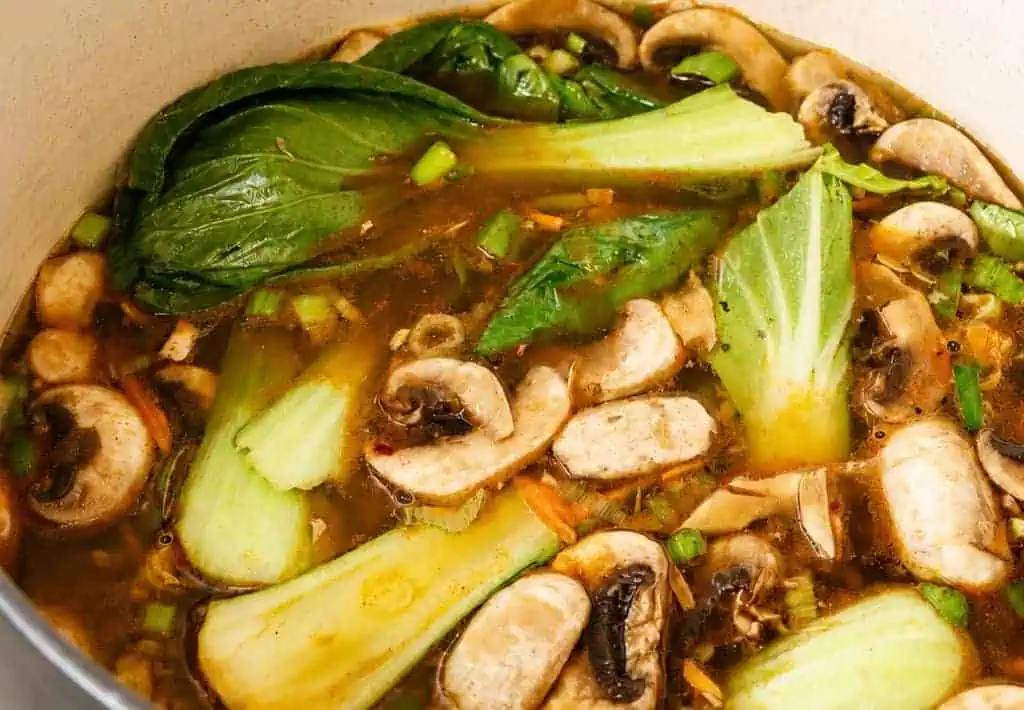
- Add the vegetable broth and water. Bring to a gentle boil, then reduce heat to medium and simmer for 5–10 minutes.
- Add the rice noodles and cook according to package directions, stirring occasionally.
- Stir in the coconut milk and lime juice. Simmer for 1–2 minutes until warmed through.
- While the noodles are cooking, bring a small pot of water to a boil. Carefully add the eggs and boil for 7 minutes. Transfer eggs to cold water. Peel and slice in half.
- Divide ramen evenly between two bowls. Top each bowl with one soft-boiled egg and garnish with cilantro or parsley.
- Serve with additional lime wedges, green onions, sesame seeds, or red pepper flakes if desired.