This article was written by dietetic student Rhesa Lawrence & reviewed by Melanie Betz MS, RD, CSR, FNKF, FAND.
If you grew up in the Caribbean, you already know, Sunday lunch is not just a meal. It is an event. The whole house smells amazing before noon, and rice and peas is always on the plate. If you aren’t familiar, think of it like Thanksgiving, but every single week.
Table of Contents
Origins of Rice and Peas
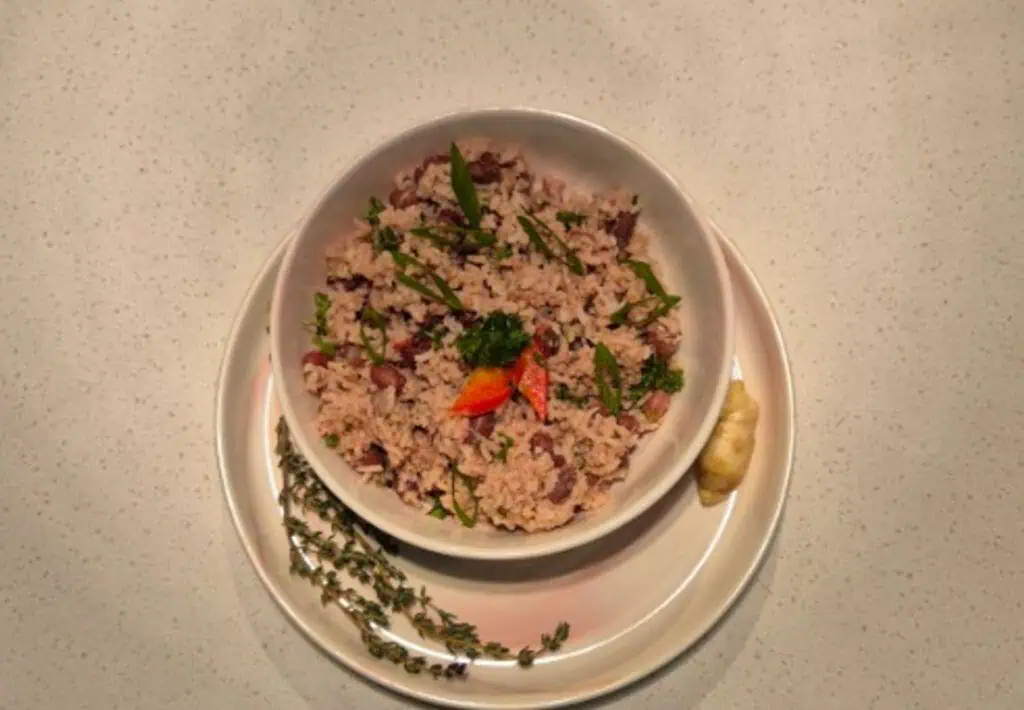
Rice and peas is one of the most loved dishes in the Caribbean. It has deep roots in West Africa, but today’s version grew out of the 1800s, when Caribbean people made the most of whatever ingredients they had. Over time, this dish became something totally on its own, a beautiful mix of flavors from across the world.
Like this delicious recipe, the Caribbean is a true melting pot. The beans come from the Americas. The rice, garlic, ginger, and coconut milk trace back to Central and Southeast Asia. The thyme and bay leaf come from the Mediterranean. When you put it all together, you get something that is 100% Caribbean.
Peas vs. Beans
In the Caribbean, it is common for one word to be used as an umbrella term to describe many things under the same category. “Peas” in this Rice and Peas Recipe is an example of this. All legumes and beans are called “peas” in the Caribbean.
This recipe also got the term rice and peas because kidney beans are not the only “peas” that can be used. Other legumes such as lentils, pigeon peas, and black-eyed peas are all delicious options for “peas” in any rice and peas recipe.
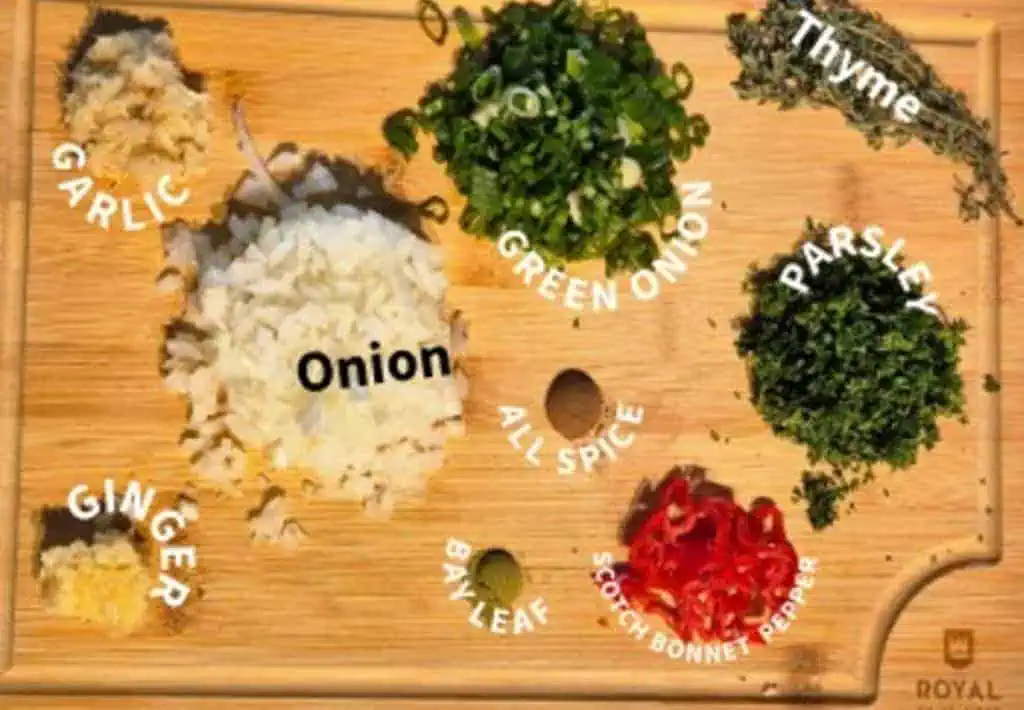
The Ingredients in Rice and Peas
Every ingredient in this dish has a story. Here is a breakdown of where each one comes from and what it brings to the plate.
Americas: Central America and the Caribbean
Red Beans
The heart of the dish. They are high in fiber, which is good for digestion and blood sugar control. Canned red beans can be used instead of dried red beans, especially if you are short on time or new to cooking.
Allspice Powder
This is one of the few spices that naturally grows in the Caribbean. It is actually one single berry, but its flavor reminds you of a blend of cinnamon, clove, and nutmeg. It brings warmth and a little sweetness without being overpowering. The powder was used in this recipe; however, the whole berry can be added.
Scotch Bonnet Pepper
Spicy peppers are used for a hint of heat. You can use a little or a lot, depending on how spicy you like it.
Scotch bonnet peppers are the traditional pepper used in the Caribbean. If scotch bonnet peppers are not available, habanero is a close second. However, red jalapenos and serrano peppers can be used.
If you are not a spicy person, bell peppers can be used.
Central and Southeast Asia
Jasmine Rice
This fragrant long-grain rice soaks up all the flavors beautifully. Traditionally, long-grain white rice is used to create this dish it was more accessible.
There is no hard rule on what rice needs to be used to create this dish. Using long-grain rice over jasmine rice would yield fluffier rice. On the other hand, swapping for brown rice will add a bit more fiber, which is wonderful for kidney health!
Coconut Milk
Coconut gives the dish its rich, creamy texture and subtle sweetness.
Garlic, Ginger & Onion
These make the flavor base. These aromatics build the savory backbone of the dish.
Good news if you do not have fresh herbs at home: garlic powder, onion powder, and ginger powder all work well in this recipe. They are easier to find at most grocery stores and still give you great flavor. Using dried spices instead of fresh does not mean the dish will taste less authentic. In the Caribbean, both fresh and dried are used, depending on what is available.
Green Onions
These add a fresh light, bright finish. Chives are also a good an option. They can be used interchangeably
Mediterranean
Thyme
This adds an earthy and slightly floral flavor. It ties all the other flavors together.
Bay Leaf
The flavor bay leaf adds to rice and peas is hard to explain, but easy to notice when it’s missing. It adds a quiet depth to the whole pot.
Caribbean Base Seasoning
Base seasoning is a hallmark of Caribbean cooking. Depending on the specific island, it might be called Green Seasoning, Sofrito, Recaito, or Epis. They are all versions of the same idea: a blended herb-and-spice paste that gives Caribbean food its signature flavor.
- Green Seasoning (used mainly in the Eastern Caribbean and Jamaica): onion, garlic, celery, chives, and parsley. Some islands also add Shadow Beni (also called Chadon Beni), which is a stronger, more intense version of cilantro.
- Sofrito (Puerto Rico and Dominican Republic): similar base but adds tomato and cilantro.
- Recaito (also Puerto Rican): cilantro-heavy and bright green in color.
- Epis (Haiti): adds scotch bonnet, cloves, thyme, oil, and vinegar for a bolder, more complex flavor.
The best part is that all these versions are easy to make. You rinse and roughly chop all the ingredients, and quickly blitz it with a blender or food processor. The thickness of the pieces is personal preference. Base seasoning can be minced or blended so much more, it’s like a paste.
For this rice and peas recipe, the green seasoning is not blended. Instead, each ingredient is chopped. Experiment with blending the base seasoning ingredients in different ways to see what you like.
This base seasoning is used in nearly every Caribbean dish. From side dishes to entrees, stewed peas to curried goat, creole rice to grilled fish. I do not know a single dish my mom made that did not have green seasoning in it. The heart of every Caribbean dish, especially meats, starts with green seasoning.
Is Caribbean Rice and Peas Healthy?
Short answer yes, it is!!
Plant Protein
Beans and other legumes are a great option for plant protein. Increasing the amount of beans used in the recipe also increases the protein content.
Plant-based protein is easier on the kidneys compared to animal protein. Eating more plant protein in place of animal protein can help slow the progression of chronic kidney disease (CKD) and prevent most types of kidney stones.
Fiber
Rice and peas is a fun way to incorporate fiber into your diet. Fiber is great for many functions in the body.
Fiber helps nourish good gut bacteria. This helps reduce the production of toxins that harm the kidneys, especially for people with CKD, and reduces inflammation. Gut bacteria can also reduce how much oxalate is absorbed, leading to fewer calcium oxalate kidney stones.
Sodium
Like every home-made meal, adding sodium during the cooking process is optional. Without adding sodium, rice and peas are made with naturally low-sodium ingredients. There are many herbs and spices in this rice and peas recipe that add a ton of flavour, reducing the need for added salt. Avoiding too much salt is key to helping with overall kidney health.
With 178mg of potassium per serving and 8mg of oxalate, this dish can fit into many kidney-friendly meal plans. The sodium content can always be modified, as most of the sodium comes from the salt added to the dish.
Remember, always, check with your dietitian about what’s right for your specific needs
Cultural Foods Are Not the Enemy for “Kidney” Diets
A lot of people with kidney disease or even diabetes is told that they need to restrict staple cultural foods like beans. This is simply not true! In fact, beans like rice and peas are actually very good for kidneys! Advice to remove beans on a kidney diet is missing a lot of context and quite frankly, outdated.
Beans used to be put on “bad” lists for kidney disease due to their potassium and phosphorus content – but we know now these minerals in healthy whole foods isn’t usually an issue. Unfortunately, this made many people feel like they had to steer clear of their cultural dishes, when these exact foods are actually perfect kidney friendly foods! Caribbean dishes like rice and peas are made from whole, minimally processed ingredients, which is exactly what we want for kidney health!
Like any recipe, the key to enjoying cultural foods on any “kidney diet” is to make adjustments that do not take away from the dish. Portion size is another way to enjoy cultural foods in a healthy, balanced diet. Take this rice and peas, for example; increasing the ratio of beans to rice would increase the fiber content of the dish. This particular rice and peas recipe also uses less salt than most traditional versions, helping to make it more kidney-friendly.
Rice and Peas on a Balanced Plate
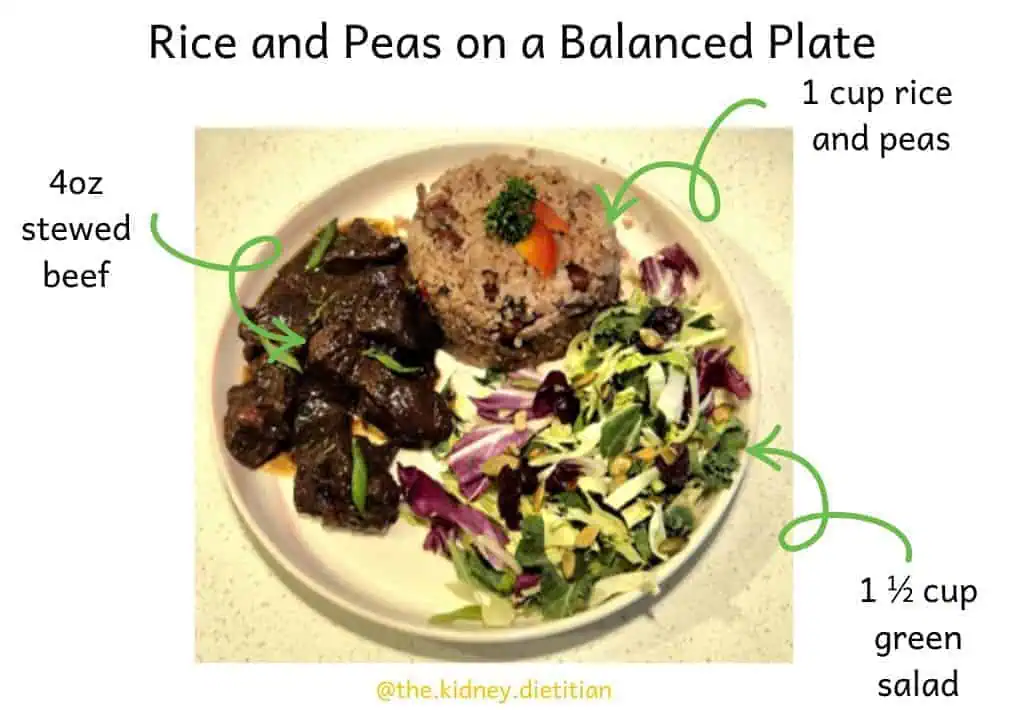
Rice and peas are traditionally a side dish, which means it pairs really well with a lot of different proteins and vegetables.
Some classic combinations include:
- Stewed or baked chicken
- Stewed beef or oxtail
- Fish (like red snapper or fish coubouillon, a Creole-style stew)
- Steamed vegetables or a garden salad
- Fried or boiled plantains
- Ground provisions (like yam, dasheen, or sweet potato)
For example, I ate this rice and peas with stewed beef and a garden salad. Here is what was on my plate:
- 1 cup rice and peas
- 4 oz stewed beef
- 1½ cups garden salad
Rice and peas could also be served as a main dish! Pair it with a salad or some more vegetables for a lower protein, plant-based meal – perfect for many people with kidney disease who need to limit how much protein they eat.

Authentic Caribbean Rice and Peas
Ingredients
- 1 cup red beans
- 1/2 tbsp fresh ginger grated
- 1/2 tsp allspice powder
- 1/2 cup green onions chopped
- 1 cup onion diced
- 1 Scotch bonnet pepper sliced (optional)
- 4 cloves garlic minced
- 1 sprig fresh thyme
- 1/2 tsp bay leaf powder
- 2 cups jasmine rice
- 1/2 tsp salt
Instructions
- Cover beans with water and soak overnight. Besure to add enough water to cover beans with at least 2 inches of water. 1
- Add beans and water in a pot and cover with water, boil until peas are fork tender approximately 35-45 mins.
- In a deep pot heat oil. Add ginger, garlic, onion, allspice, green onion, bay leaf powder, and thyme, stir occasionally until onion is translucent 2-4 mins
- Add rice and stir until all the aromatics are evenly distributed and rice becomes fragrant, about 3 minutes.
- Drain beans, reserving 2 cups of water. Add drained beans and reserved bean water, coconut milk, one cup of water and salt. Turn burner to low, cover pot.
- Cook for about 20-30 minutes until all the water is absorbed and rice is tender.
- Fluff rice and squeeze grain between finders toensure its cooked thoroughly.