This article was written by dietetic student Olivia Jones & reviewed by Melanie Betz MS, RD, CSR, FNKF, FAND.
Craving the savory goodness of fried rice but looking to cut back on sodium? This low-sodium fried rice delivers all the flavor without the excess salt!
*Please note that this post contains clearly identified affiliate links. As an Amazon affiliate, I may earn a small commission on qualifying purchases (at no extra cost to you).
Table of Contents
Is Low Sodium Fried Rice Healthy?
Absolutely! Whereas traditional fried rice tends to be quite high in sodium, this low sodium version can easily fit into a healthy low sodium diet for kidney disease, kidney stones, high blood pressure – or any other reason!
Fried rice is an entire meal in one dish! It has carbohydrate (rice), veggies and some protein (egg + meat or other plant based protein). For extra nutrition, pack your low sodium fried rice with extra vegetables!
Rice + Protein + Vegetables + Low Sodium Sauce = Low Sodium Fried Rice
This simple formula makes fried rice a beloved dish worldwide–and for good reason! With just a few pantry and freezer staples, plus a flavorful sauce, you can create a delicious, satisfying meal or side dish.
Rice for Fried Rice
You can use any type of rice for low sodium fried rice. All types of rice are naturally low in sodium. We recommend using brown rice for a bit of extra fiber, vitamins, minerals and plant based protein. However, any type of rice can fit in a healthy diet.
A low-carb option to fried rice is to swap out rice for cauliflower rice. Substitute it entirely or try half and half! You can always make your food work for YOU and still enjoy beloved favorites.
Protein for Fried Rice
You can use whatever protein you’d like for low sodium fried rice! Experiment with chicken, shrimp or pork if you are looking for a meat source.
If you’re aiming for a plant-based dish, consider using tofu, edamame, or eggs instead!
Veggies for Fried Rice
Perhaps the best thing about fried rice is it is a great way to sneak in some vegetables! Vegetables like carrots, peas, bell peppers, broccoli, mushrooms, corn or onion can add color, texture, and nutrients like fiber and essential vitamins.
Low Sodium Sauce
To add that signature fried rice flavor, most fried rice recipes call for lots of soy sauce and pre-made stir fry sauces.
These salty sauces are the culprit of all that sodium! The sauces alone can increase the sodium content to nearly 1000 mg per serving! For context, a side of fried rice at Panda Express has 850mg of sodium.
For all you spicy food lovers, try adding some low sodium hot sauce ! Or, try out one of these other homemade, low sodium sauces that actually taste good!
Don’t worry about giving up on your favorite rice dish yet–let’s talk about how to make the meal itself low sodium.
How To Make Fried Rice Low Sodium
Fried rice is traditionally pretty high in sodium. Most of the salt comes from the sauce, as well as salt directly added to the dish. Focus on making a flavor-packed sauce that uses fresh spices like garlic and ginger. These can go a long way to keep this fried rice low in sodium, but still pack a ton of delicious flavor!
For a base to the delicious low sodium sauce, sesame oil is a great option. It has a nutty, classic Chinese flavor with zero sodium.
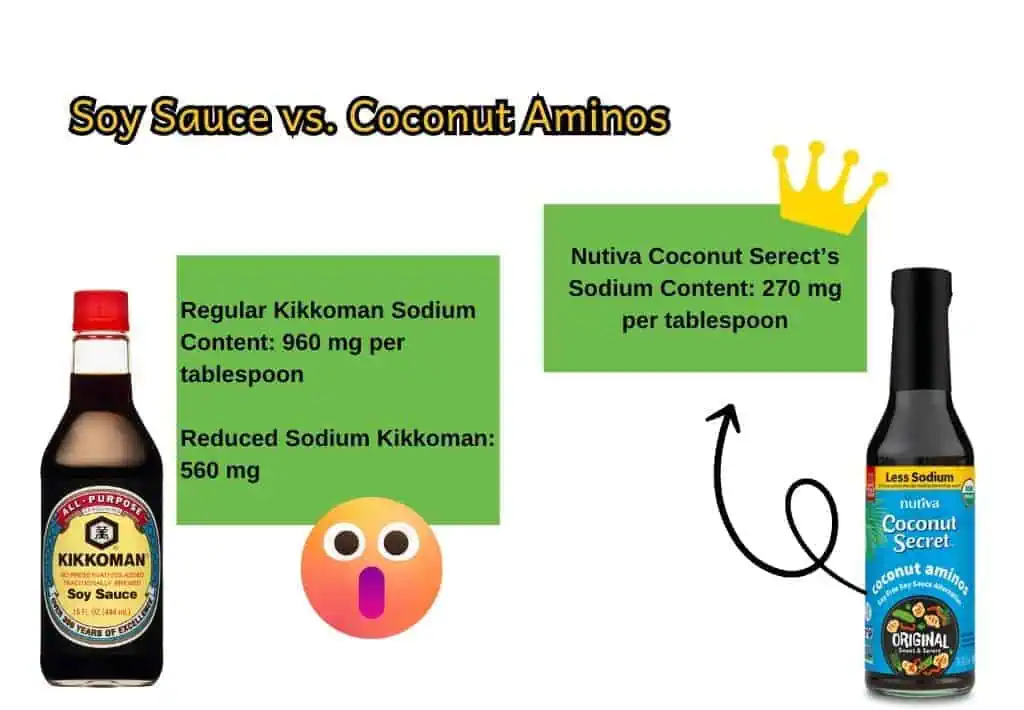
Next, swap soy sauce for coconut aminos*. Coconut aminos have roughly half the sodium that even low-sodium soy sauce has (~590 mg per tablespoon)! They are also soy and gluten free for folks with allergies or intolerances! If you can’t find coconut aminos, low sodium soy sauce can absolutely work, but it will add a bit more sodium compared to coconut aminos.
Fried Rice Variations – Get Creative!
One of the easiest ways to create a delicious meal AND save money, is to clean out your fridge and get creative! You can typically throw any leftover vegetables you have in a recipe. If you have a few carrots or mushrooms left–throw it in the pan! It will not only prevent food waste but boost the nutrition of your meal.
This “clean out the veggie drawer” strategy works especially well with this fried rice recipe.
Remember, the more veggies you add, the more filling, nutritious and satisfying it will be!
How To Serve Fried Rice
As a Main Dish
Low sodium fried rice can be an entire meal all by itself! In fact, fried rice as a main dish can be a great way to make a little protein go a long way.
“Cutting” animal protein with other ingredients like rice or vegetables can help stretch that animal protein and help it go further. This is a great option for people with kidney disease or kidney stones who may need to limit protein, especially from animal sources like chicken, beef or pork.
This is also a great option for people who are budget conscious. Meat tends to be expensive, and cutting it with cheaper ingredients like rice and vegetables can help save money.
As a Side Dish
Of course, low sodium fried rice can also be served as a side dish. It pairs beautifully with grilled or baked chicken, fish or tofu!
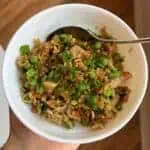
Low Sodium Fried Rice
Materials
- 1 tsp canola oil
- 6 oz boneless skinless chicken thighs
- 1 1/2 cups leftover brown rice bonus to make it with low sodium broth
- 1 cup carrots, peeled & diced
- 3/4 cup frozen peas
- 1/2 cup onion, diced
- 1/2 cup green onions, chopped save some for garnish
- 2 fresh garlic gloves, minced or 1/4 tsp garlic powder
- 2 tsp fresh ginger, grated or minced or 1/2 tsp ground ginger
- 1 egg
- 2 tbsp coconut aminos
- 2 tsp rice vinegar
- Low-sodium hot sauce optional
Instructions
- Heat a large skillet over medium-high heat and add the oil.
- Dice your chicken or preferred protein and cook in the skilled for 6-8 minutes or until fully cooked. Remove from the pan and set aside.
- Add cooked rice, diced carrots, peas and chopped onions to the skillet. Cover and cook for 5 minutes, stirring occasionally.
- Stir in green onions, garlic and ginger. Push the rice mixture to the edges of the skillet, creating a space in the center.
- Crack an egg into the center and scramble until fully cooked, then mix it into the rice.
- Return the cooked chicken or protein to the pan. Add coconut aminos, rice vinegar, and hot sauce to taste. Stir well to combine everything evenly.
- Try serving it with quick pickled cucumbers! Recipe on my site!
Notes
- You can use frozen or low sodium canned mixed vegetables, just make sure to drain and rinse canned products.
- Nutrition per serving: 347 calories, 8g fat, 2g saturated fat, 155 mg cholesterol, 334 mg sodium, 44g carbohydrates, 6g fiber, 0g added sugar, 24g protein, 528 mg potassium, 321 mg phosphorus, 40 mg oxalate
Loved this low sodium fried rice? Explore more heart-healthy, low sodium recipes like our mixed vegetable curry, pork stir-fry, baked salmon, and more!
Happy eating!
Melanie